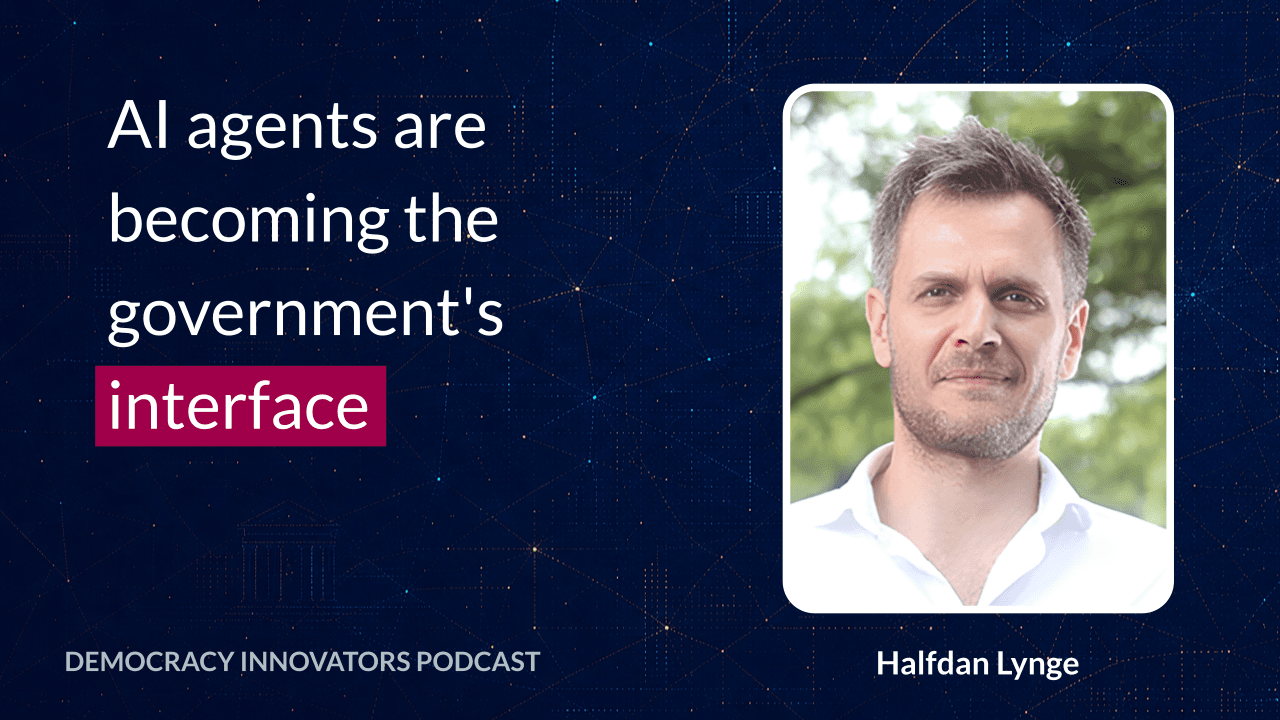
Halfdan Lynge draws on his work in Danish digital government and his experience in Mozambique to discuss where civic tech and GovTech overlap, and how infrastructure, funding and regulation shape what can be built. He and Alessandro then consider what happens when AI agents become an interface betwe
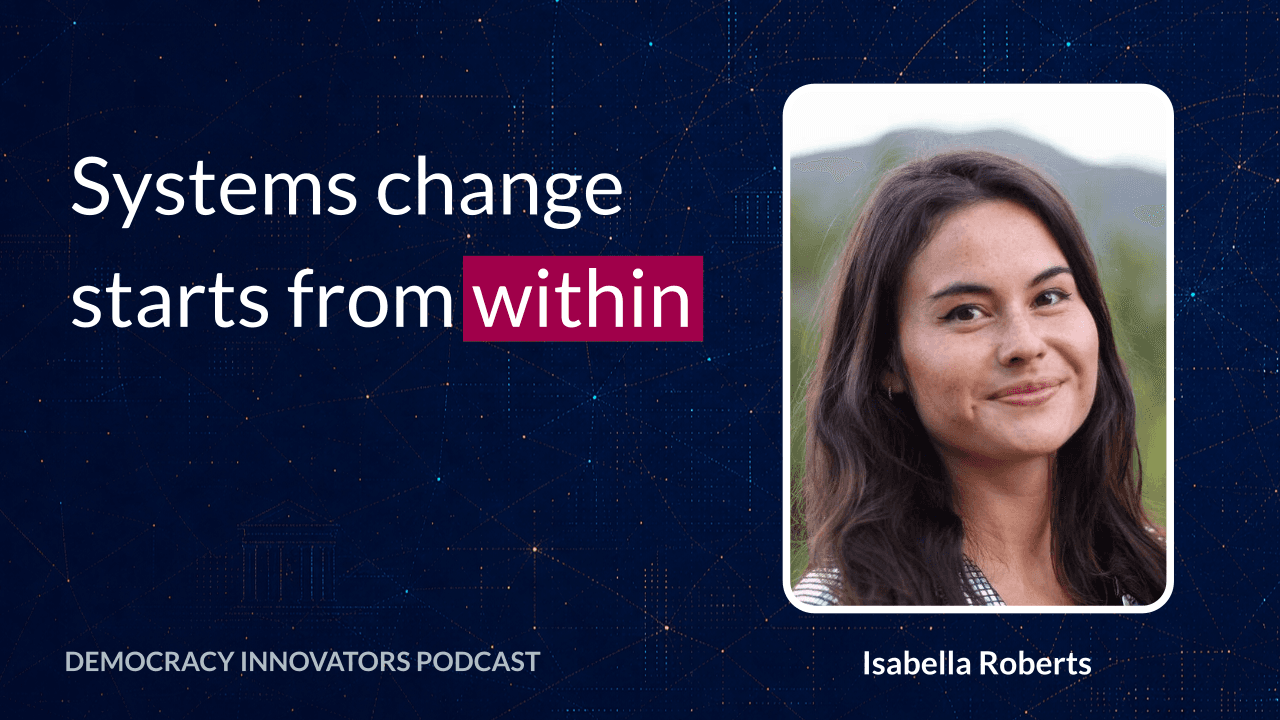
Isabella Roberts discusses her move from finance and electoral politics into research on deliberative democracy, AI and immersive technology. She explains her BoomTown Festival experiment using surveys and biosensors during mini citizens’ assemblies, including an early finding of increased shared id
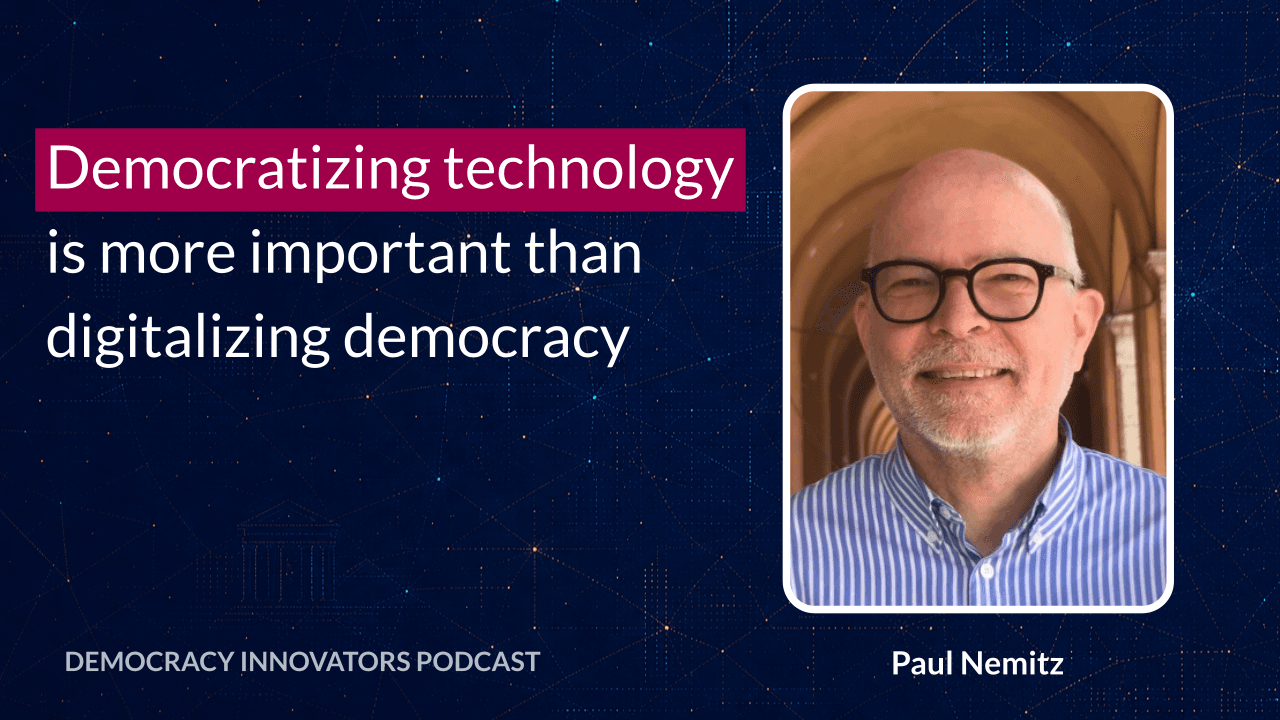
Paul Nemitz examines how concentrated control over data, infrastructure and AI can weaken democratic life, and argues that these technologies are not politically neutral. Drawing on his experience with the GDPR and other EU digital legislation, he discusses regulatory enforcement, the limits of trea
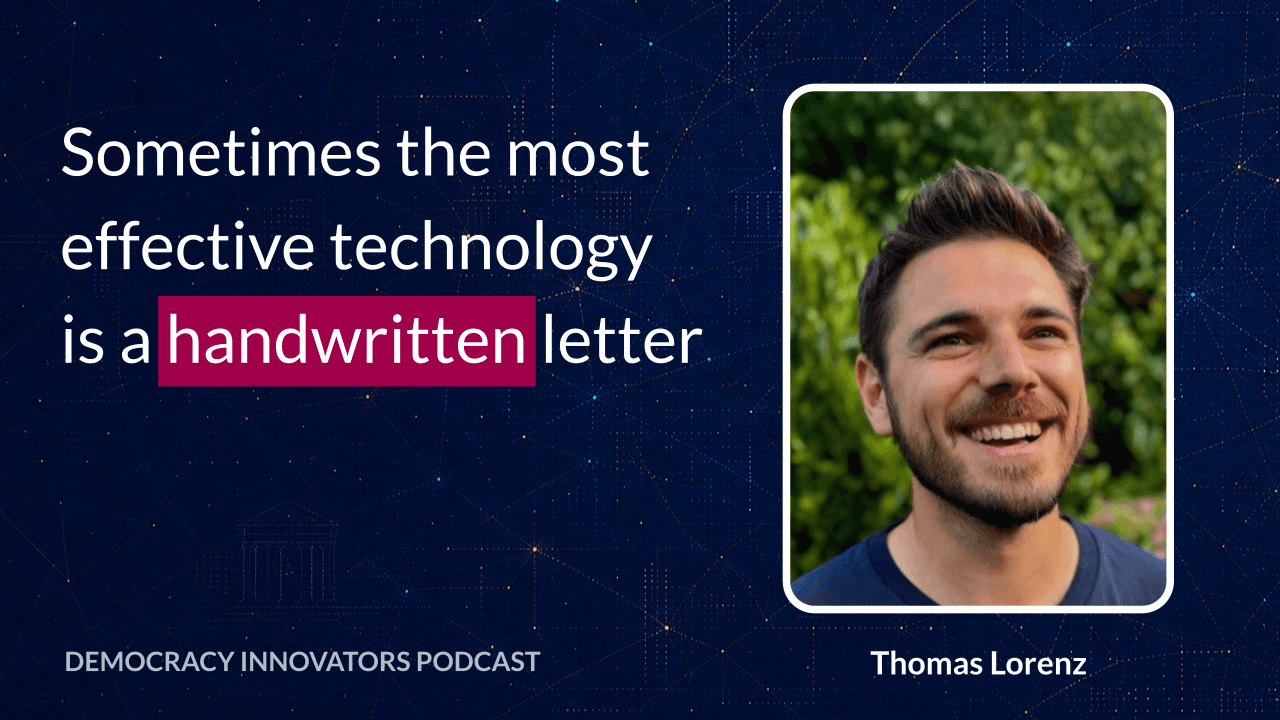
Thomas Lorenz discusses Brief nach Berlin, an open-source, AI-assisted tool that helps citizens identify the appropriate political representative, draft a letter about a local concern and then copy it by hand. The conversation uses this practical project to examine how civic technology can lower bar
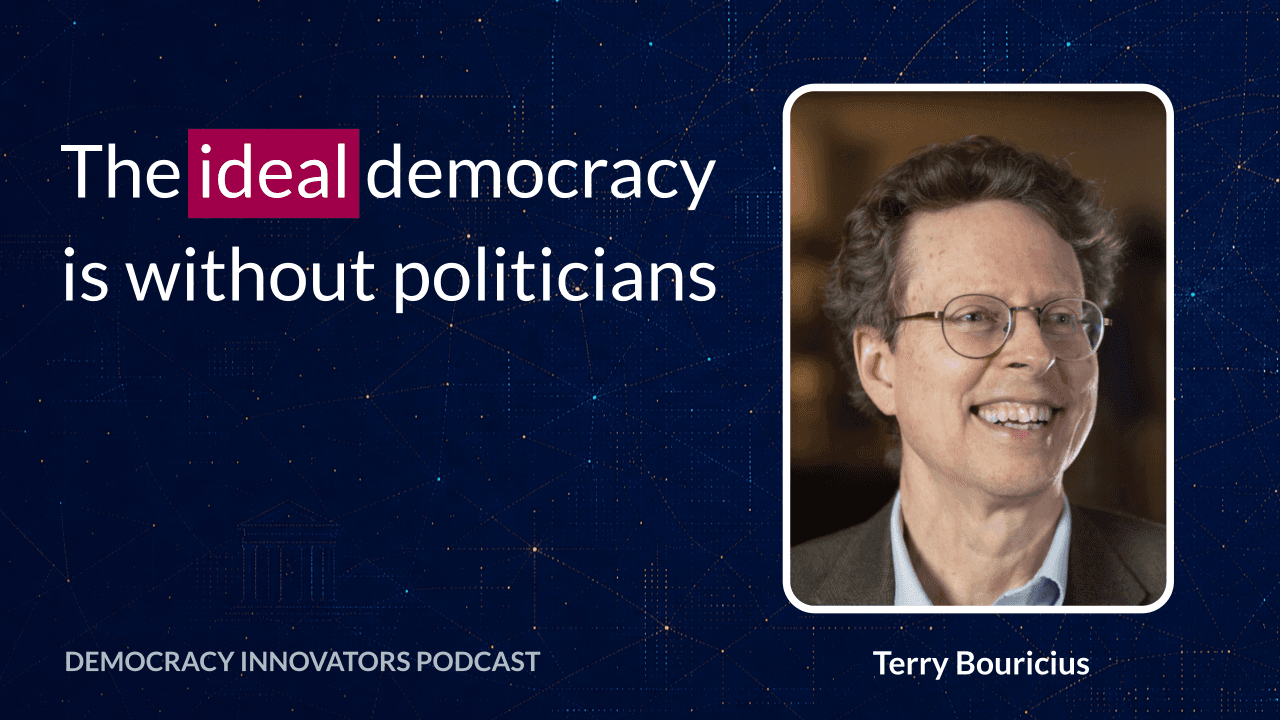
Former Vermont lawmaker Terry Bouricious explains how observing the British Columbia Citizens’ Assembly led him to focus on sortition: selecting ordinary citizens by lottery to make public decisions. Drawing on his experience inside elected politics, he argues that elections favor political elites a
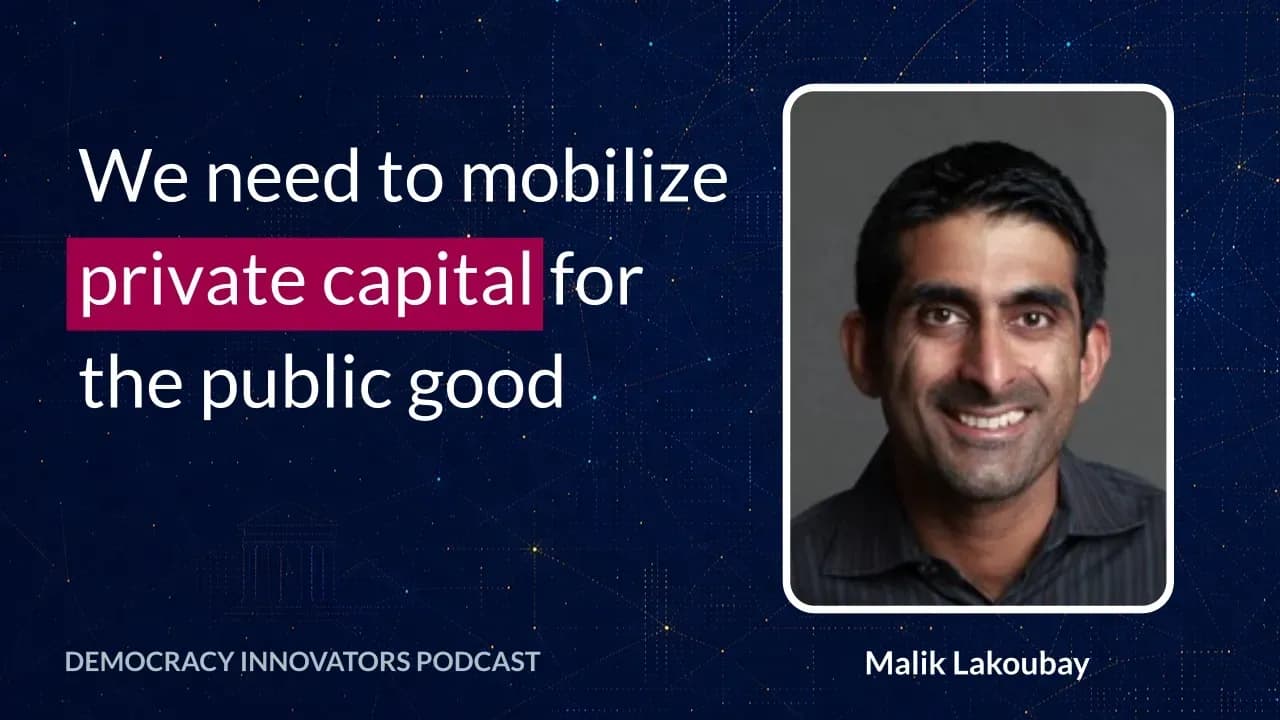
Malik Lakoubay of Dark Matter Labs discusses how civic infrastructure can be financed as an asset class rather than depending solely on philanthropy. Drawing on his work with RadicalxChange and Dark Matter Labs, he explores democracy and civic bonds, community-led risk sensing in Mumbai, data owners
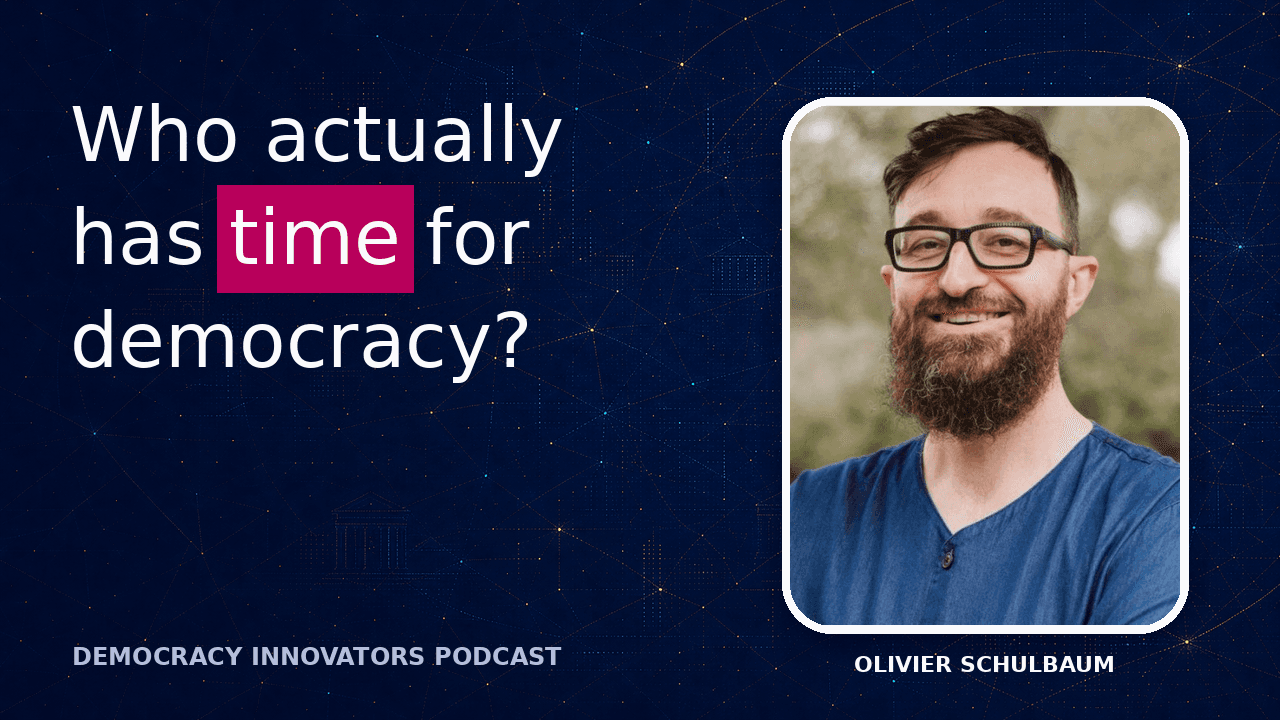
Olivier Schulbaum discusses how Platoniq and Goteo connect civic technology, culture, social innovation and democratic experimentation. He examines citizen assemblies through affective legitimacy, enclave deliberation and art-based methods, arguing that those most affected should help set the agenda
Every episode is free to listen to, with a full transcript anyone can search and cite. Donations cover the hosting and transcription that keep it that way.