
Automatic transcription, there could be errors.
Alessandro Oppo00:07Welcome to another episode of the Democracy Innovators podcast, and our guest of today is Halfdan Lynge. So thank you for your time and for being here. And I have... I mean, the first question is if you can say something about you, your experience, your background. So
Halfdan Lynge00:28Yeah. No. Thanks thanks thanks, Alessandro, and thanks for inviting me to to speak on on your podcast, and I'm looking forward to this conversation. Yeah. So my name is Halfdan Lynge. You were close enough. It's a it's a Danish name. I'm from Denmark. It's a little bit hard for non Danes to pronounce, so you were close enough. I'm currently a chief advisor in the Danish Agency for Digital Government, which is the government agency in Denmark that runs most of the digital public infrastructure, identity systems, payment services, etcetera, etcetera. I work specifically on data governance and sort of open data infrastructure. We run an open data platform, the Danish the national Danish national open data platform called Datavejviser, which is a metadata catalog for for government data from across government. I think it's about 300 oh no, three and a half thousand data sets now from more than around 100 agencies from across government. So that's my daytime job. In addition to that, I'm a visiting senior researcher at Wits University in South Africa, where I'm also a research fellow at something called Tayarisha Centre for Digital Governance, which is hosted at Wits University. The reason I'm attached to a university in South Africa is that I was previously a faculty member, a staff at Wits University. I was a senior lecturer there, taught political economy and quantitative methods and and and was part of a small team that contributed to setting up this this center, the Tayarisha Center on Digital Governance. Prior to that, I mean, I've worked in this space for more than twenty years now. I started my career as a UN official. I was working with UNDP, United Nations Development Program in... First in in... Shortly in Ethiopia, then Mozambique, and and lastly in in Bangladesh where I was... These were the very sort of early phases of of what we today call digital government. At the time, it was called... I think we called it e e government at the time. So these were very sort of early stage initiatives on how to introduce technology in in public administration. In Mozambique, I was I was involved... We were working with the electoral commission of of Mozambique assisting the technical secretariat with setting up biometric voter registration and verification and introducing sort of digital systems for the transfer of results. But this is, you know, these are standard things today, but twenty years ago it was fairly new. In Bangladesh, I worked in what was called the resident coordinator's office. So that's the part of the UN that's responsible for coordinating activities from across the different UN agencies. And, specifically, I was involved in the initiative that eventually led to Bangladesh's first digitalization strategy called Digital Bangladesh. Again, these were is twenty years ago, these were fairly sort of new things at the time, but nowadays they're common practice. After about six years, I think I left the UN and went back to university to pursue a PhD. I was a PhD researcher at Oxford University and did that for about, well, too long. These things often take longer than they are meant to. I think I was on and off in Oxford for about six years. And in the meantime, I actually returned to Mozambique and set up a a Govtech startup working on... Essentially, what we we did was develop a a platform that allowed us to crowdsource information through mobile phones. And it was a fairly simple technology based on sort of third generation mobile technology, so SMS and USSD. And we set up this platform that allowed us to send bulk SMS out and collect, you know, little questionnaires. And it was a way of collecting information from citizens, and we used it for anything from political polling to market research. But the real sort of interest in application, I think, was for crowdsourcing and creating a platform that allowed sort of citizens engagement real time in a and I think that's important to keep in mind. Mozambique at the time and to some extent still today was a very sort of low connectivity environment. There was no three, four, five gs coverage across the country, so you can't use smartphones, you can't use Internet. So you have to design technological solutions that allow people to use sort of simple feature phones, SMS, and that kind of things. So I did that for about also six years or so before I then joined the university in South Africa. So it's a long story and my career has taken many twists and turns, but I think the underlying thread is an interest in how technology can be deployed. Specifically, I mean, I come from a kind of a data science background or computational social science, and that's always been my sort of interest in how we can use technology and specifically sort of data and data analytics to improve public service delivery, whether that's through fixing things in government or it's through, you know, kind of a civic tech approach where you can use these kind of tools to hold government accountable, etcetera. But that's really sort of the center of my interest and what I I suppose kind of connects all these different different elements of of of my professional career. Yeah.
Alessandro Oppo07:25So you you have worked on a lot of things. And I was wondering with some friends that I was interviewed here in the podcast. Sometimes we were talking about the different... About civic tech and gov tech, if it makes sense to make two categories or not. And what do you think?
Halfdan Lynge07:51Yeah. I mean, I have had extensive conversations with my previous colleagues and now friends at WITS University. So at Wits University and under the umbrella of the Tayarisha Center for Digital Governance, we hosted something called the Civic Tech Innovation Network, which is a network of researchers, activists, sort of civic techies from across the African Continent. And until today, sit on what's called the reference group, so kind of like the body that oversees there's a small secretariat that manages sort of day to day activities, but I still sit on that reference group. And in that context, we often have these conversations, what's govtech, what's civic tech, and are we talking about the same thing? In my conceptualization, civic tech is deployment of technology with the purpose of enhancing transparency, enhancing accountability, etcetera. So it's kind of like working with the mechanics of a democratic state as a way to, I suppose, force governments to deliver what they're supposed to. Right? If you increase transparency and accountability, it's a way of ensuring that governments are actually delivering what they're supposed to deliver. Now, maybe I should say, GovTech for me is kind of the I think I lean very much on the sort of OECD definition of GovTech here. It's the collaboration between public sector and private sector, be it for profit corporations or civil society initiatives, but it's a collaboration between public and private with a view to improving government service delivery, right? So improving systems, processes, etc. Within government. But it very much centers on the sort of collaboration between government and non governmental sectors. One of the reasons I think why there's often a confusion, and specifically in the context of Africa, is that the whole civic tech concept for me presupposes a functioning democratic state. Like, if greater accountability, greater transparency, etcetera, If that should lead to increased or improved service delivery, it presupposes that there is some kind of relative functioning state already, that the state, that the government is able to deliver something. It might not do it for XYZ reasons. There can be sort of political economy questions. There can be capacity issues, but there is like the core is in order and by exposing inefficiencies or by pointing to deficiencies in government service delivery, it's assumed that you can kind of like push or nudge or force government to address its issues, right? Now, in the context of Africa, that does not necessarily exist, right? Even if you expose, let's say, corruption or inefficiencies in the public sector in let's take Mozambique, which is a country I worked in for many years, there is no guarantee that that will translate to any change, any improvement because of the incentives that are built into the system and the sort of lack of fundamental accountability, right? So the concept of civic tech, in my view, does not necessarily apply if the basics are not in order. And the implication of that is that if you look at the initiatives and the organisations and the people that are active and involved in the Civic Tech Innovation Network, which is an Africa specific network, you would often see that the applications, the deployments, the projects they get involved in is much closer to what I would consider GovTech, simply because they are essentially trying to fill the vacuum or fill the, yeah, the vacuum that's missing. The absent state creates a vacuum, right? And now civil society, private sector are trying to fill that vacuum, be it in terms of making sure that services reach the most remote areas or that citizens have basic information. So it's much closer to GovTech, whereas as the sort of traditional civic tech initiatives, even if it's called the Civic Tech Innovation Network, they are not necessarily the sort of bigger bulk of initiatives or projects in the African Continent. Now, that's my personal view, and I have had many conversations with my colleagues at this university and across the African Continent, and they don't necessarily agree, but at least it's kind of like my thinking around it that there's a clear distinction. Oh, there's obviously an overlap in the mid, but they are fundamentally two things that... And and they are and they are solutions to different types of problems. That's a long answer to something that shouldn't necessarily be that complex, but I hope you understand what I'm saying.
Alessandro Oppo14:00Yeah. Absolutely. I think that... I mean, if people that are in this field repeatedly talk about the distinction of civic tech and gov tech maybe is not so... I mean, it's worth it to think about it. And I was thinking in relation to the context of Africa, I can imagine that many other things were different, but if you could maybe highlight some differences between Africa and maybe Europe in term of digital transformation or...
Halfdan Lynge14:45Yeah. I mean, it's a very interesting, but also extremely broad question, obviously. I think I can, I mean, I can only speak from my personal experience there? I think when we started out, when my business partner and I set up the Govtech startup initially, we weren't really thinking of Govtech or Civic Tech. We were just thinking about a a a creating an organization that could deliver data products, developing a platform that would allow us to generate more information about the realities of rural Mozambique, of rural Africa, and thereby creating a knowledge base that policy can be built upon, right? Creating evidence for government and other policymakers. Now, the first challenge obviously is how you I mean, there's a fundamental infrastructure issue. I briefly spoke about it. So designing or developing an application that allows us to connect to rural Mozambique required you know, you have to simplify it as much as possible, simply because we cannot assume that people have smartphones. We cannot assume that people have three, four, five gs connectivity. We cannot even if they have a smartphone, even if they have connectivity, we cannot assume they have access to data. So the fundamental infrastructural issues are different in a context like Mozambique. So you have to build on that, and you have to start with the realities. And that's why we ended up with this very simple application that used SMS exchanges, USSD sessions, which is another simple mobile protocol that allowed us to make these very simple questionnaires. We could ask very short questions, and we could ask, you know, maybe 15, 20 questions through kind of like an interaction. So the the fundamental deployment of technology is completely different. I think a second difference is that the business models around GovTech or Civic Tech is also completely different because you cannot use the same kind of you cannot rely on micropayments, really. You cannot rely on on people willing to pay for services. You cannot rely on on advertisement or anything. I mean, any kind of application deployment has to have some kind of of of financial economic base. You cannot rely it was very difficult my experience is it's very difficult to get, like, sort of seed funding innovation grants that are quite common to access in Europe and especially North America. So you really also have to think of an operation where you have to start you have to start making money from day one. Right? You have to be able because, I mean, you cannot it's unlikely or you have to be very good to kind of get an investor on board to say, Okay, I'll pay for your expenses or, you know, here's, I don't know, a few million a few million dollars to run the operation for the first two, three years. It's very unlikely to happen. So you have to think of ways that creates a cash flow already from the beginning. You have to think of I mean, our ambition was also let's create let's set up this company in such a way that we have a commercial arm that generates revenue. We can use the same application, the same platform to sell data product services for private companies, non governmental organization, UN agencies, etcetera, we can generate some kind of revenue over here and then we can use that to subsidize sort of more civil society, civic tech type initiatives. We think it's important that we generate some information about XYZ and we now have a revenue stream that can subsidize. That was our ambition from the very beginning, but you see it really depends on the ability of identifying that revenue stream, that cash flow. I think that's also completely different, at least. I mean, I haven't worked in kind of like the startup ecosystems in Europe, but from what I observe in my current role is that most of them have some kind of grant or some kind of investor that allows them to, you know, spend at least a year, maybe two years developing an organization, developing a product, developing services before they're required to actually start making money. And it completely changes your mindset and how you approach it. I think that's also a big difference from how these initiatives are structured in an African context versus a European context. The third I want to I mean, again, that's a very long question or very long answer. The third leg, I would say, is kind of regulatory. Often the regulatory environment is not as clearly defined. There might be areas that are not fully regulated in an African context, and even if it is regulated on paper, the enforcement of the regulation is inconsistent. And obviously, that makes it very difficult to navigate as a startup, because it's not entirely clear what you're allowed to do and what you're not allowed to do, and some things might not be allowed, but still, if you go ahead and do it, nobody will say anything. I mean, one of the concrete challenges we had was that in the market we were operating in, meaning companies that were selling kind of like data services, data products. We often experienced that we were competing with international, non Mozambican, non African companies without any kind of legal basis for operating in the continent, thereby technically not being allowed to sell those services, and yet they still did. So they were doing things they were not allowed to do, and yet we often lost contract to some of these big international organizations or international companies. So again, the regulatory environment is very difficult to understand, to navigate, and often the most successful is the one who's willing to take the most risks and operate on sort of the regulatory gray zone. And that makes it, at least in my experience, makes it very difficult. At times, yeah, it's not very nice when you're unsure of what is allowed and what's not allowed, and you can see that people who are consistently breaking the law are still getting away with it. Yeah. So those were the kind of three areas, the technological infrastructure, the sort of financial models around Govtech, and then the regulatory environment. In all different spheres, they are completely different.
Alessandro Oppo23:35Yeah. I can imagine a lot of differences. Also, social. And as well, of course. Yeah. Yeah. Yeah. Yeah. And going back to, let's say, to Europe. Yeah. Maybe to to Denmark. Yeah. What... I mean, you you said that you work for the Danish agency for digital government. Yeah. And in that case, what were, like, let's say, the job to do and also what what was, let's say, difficult or particularly interesting?
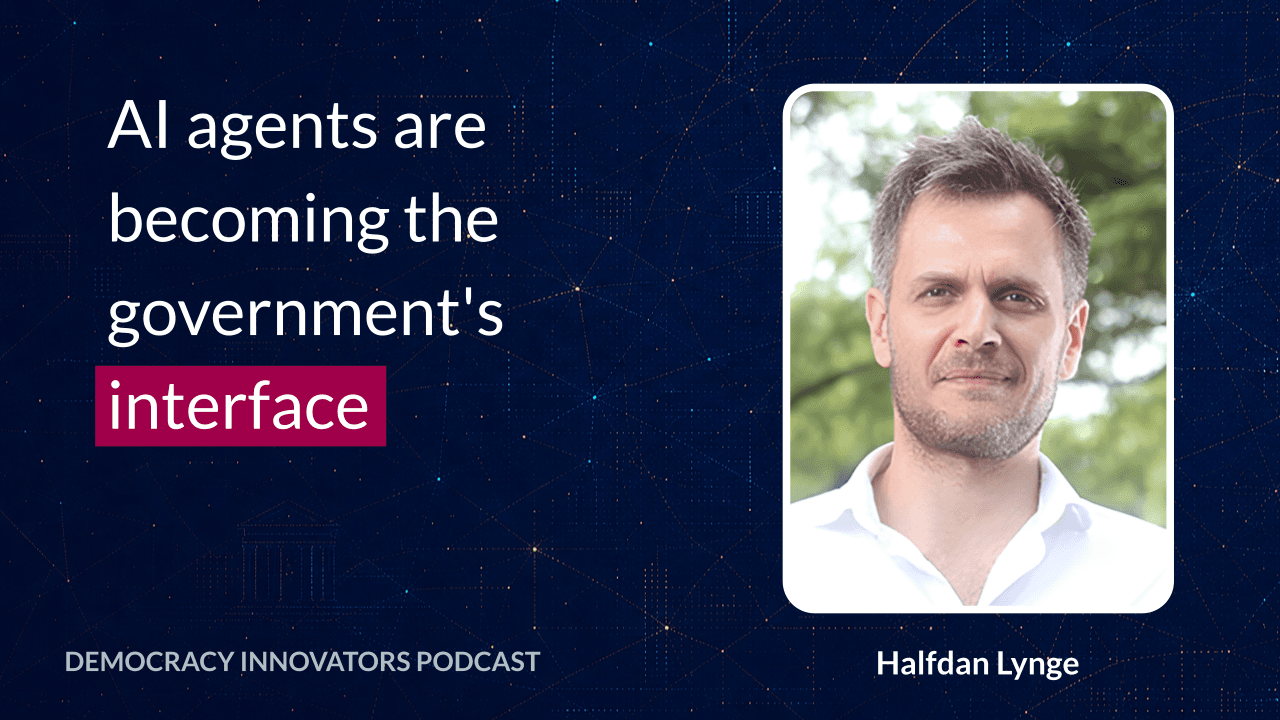
Halfdan Lynge24:16Yeah. I mean, should say, work at the Agency for Digital Government, but obviously, I can't speak on behalf of the agency. So my views are only my views, so just to be clear about that. I think I mean, obviously so I joined the Danish government about a little bit more than two years ago after spending most of my professional life in Southern Africa. And I think coming from that angle and going into a government entity like, like the Danish or the Danish Agency for Digital Government, it's it's, It's a very highly functioning, highly efficient organisational system where I mean, I think Denmark has been extremely successful in already fifteen, twenty years ago. The government took some bold decisions and started implementing digital public infrastructure, forcing government agencies to use sort of digital platforms, forcing citizens to engage with government through digital channels. So there were some very bold, ambitious and very visionary decisions that were taken fifteen, twenty years ago. And I think even until today, the Danish public sector benefits from that. That has kind of like kept a high level of quality in digital governments and service provision for many, many years. I think also it has become a little bit of how should I put it I think because it has been such a success and it has sustained a high level over many years, I think also there's a little bit of sort of I don't know if it's inertia or kind of like comfort in, Okay, we've already received the high level. So, I feel that kind of like innovation has not really kept up, and you can see that, for example, in the latest OECD digital government index last year. Denmark dropped from, I think, a third to an eighth place. And I don't I mean, these indices are what they are, and it's just a proxy measure. But I think it reflects a little bit of yeah, I think it's time that people set new goals and kind of start thinking not just of fixing the little shortcomings here and there, but actually start creating a vision for what do we want digital government to look like in five, ten, fifteen years. And a lot of that work has already started. So two years ago, the government created a intergovernmental task force on artificial intelligence, and there's a lot of things happening, but it still hasn't fully materialized into like a concrete vision. I I hope hope it's coming, and I think so, because, I mean, these are views that I hear also from many colleagues, but we are not quite there yet. We need to kind of set the next goals. I think in concrete case, again, on open data and open data portals, one of the things we are seeing is that there is an increased activity from AI agents because citizens start using AI agents to they're not just using a browser anymore, they use an AI agent. So, you know, you can imagine that Citizen X received some kind of letter from government that, you know, they no longer qualify for something, and for that citizen to make sense of it, what they will typically do is they'll take the letter and upload it in, you know, some kind of a Claude or ChatGPT or whatever they use, and ask that agent or assistant to interpret the information. They also ask that agent to seek information. Okay, so what are my options now? Can I appeal the decision? Do I qualify for something else, etcetera? So all of a sudden you realize that that agent becomes the interface between citizens and certainly information about government, but soon also actual engagement with the government, right? They will very soon expect that agent also to prepare applications, maybe even file applications, etcetera, etcetera. And all of a sudden you have this situation where the relationship between government and citizens become agent mediated, and governments do not control the agent. They are provided by third party providers. Governments can develop their own agents, and that's happening all over. I mean, you briefly spoke about the Agentic State Initiative. That's the whole idea of how do we set up government to develop and run government business through AI agents, right? I think so that's kind of the government side of things. I think a much bigger challenge and something that requires much greater rethinking of how government is restructured is the fact that the agents become the interface. The third party agents become the interface of government citizen relations. So how do we make sure that even if we don't control that, the front end that's technically what it becomes the front end of governments become a third party agent. Now what can we do with the back end of government? What can we do with the digital public infrastructure to ensure that the information that's or that that information is accessible and available so that the agent doesn't, you know, the third party agent doesn't hallucinate and misinform the citizens, etcetera, etcetera. So there's some kind of fundamental rethinking that has to be done where we have to understand and perhaps redirect initiatives, investments to accommodate for the scenario when that third party agent becomes an important interface between citizens and the state. For us, in the case of sort of open data portal and access to open data, that means that, so, okay, we have this portal now, but if it's if the future user of that portal is not a researcher, a student, a journalist, a civil society activist or whatever, who is either going to a portal and searching for specific data or coding up some kind of data pipeline where, you know, connect to this API, connect, you know, there's always a human kind of sitting in that, and that's how the platform was developed and that's how we have assumed it was used. But now we are seeing that actually already we see that it's being used autonomously by agents. They might be agents prompted by citizens, but they are acting, you know, they are prompted in a way, I want to know XYZ about government, and then the agent itself goes and looks for data, starts compiling data set, merging data set and trying to answer the questions. That raises a lot of questions about the architecture of the portal. The metadata we publish on the portal, what metadata standards, what metadata fields, other kinds of protocols. Maybe it's not enough just to have an API, maybe we need something called context protocol, which is a type of protocol that accommodates specifically or that caters specifically to AI agents. So it raises a lot of questions and we've only kind of like started addressing some of these issues and to really understand how AI agents interact with infrastructure, specifically Open Data Portal, and what it means in terms of or what the implications are for us in terms of changing or adapting or reconfiguring the portal and the broader infrastructure.
Alessandro Oppo33:53Yeah. I saw that these things about AI agents change a lot. Also, I saw recently a news that can since are related, like, that as an example, Anthropic, Claude. Basically, they are not using Git anymore. They built a new protocol because Git was good for humans and not for AI agents. Because when AI agents read, they have to write in a very quick way Yeah. Then Git is not enough. So I was thinking about how all the infrastructure now is made for humans. But if we are moving toward an Internet that is mainly used by AI agents, then Yeah. Maybe call me. I suspect you are referring to the model
Halfdan Lynge34:39context protocol, MCP, which was developed initially by Anthropic, but now I think it was handed over to the Linux Foundation. So it is it was a protocol developed by Anthropic, but it's slowly becoming the kind of standard for how agents interact with databases. So you can take an existing database and you can implement an MCP server around it, and that allows the agents to interact with that data in a standardized format. So it's one of the steps that we are considering whether we need to implement that around government data in order for AI agents to actually fully utilize and fully, yeah, to have access to the full, depth of all information available within government instead of guessing.
Alessandro Oppo35:37Yeah. Now in that case, was about the Git protocol, so the one that is, let's say, under GitHub. Oh, okay. Sorry. I misunderstood you. Yeah. Yeah. No. Sorry for the pronunciation maybe. And... But, yeah, it was interesting because it showed the difference between Yeah. What this was I mean, was okay in the past, maybe not okay in the future, that Yeah. This protocol. And and and, yeah, before you say, like, how, like, a digital, I don't know, government or... Could look or should look like in five, ten or more years. And, we mentioned also the agentic state. And so... Because we don't have, like, let's say, an exact timeline, we can just see that technology is evolving very faster. Yeah. And also citizens are start using technology also. Yeah. I mean, also before technology. I mean, specifically AI. And so I wonder if you have a sort of possible timeline. I know I know it's very difficult to say, but Yeah. How do you imagine, like, the future of digital transformation and democracy?
Halfdan Lynge37:01Yeah. No. I I I don't dare... Because listen. One one year ago or let's say one one and a half years ago, it was only experts who knew what an AI agent was. And now, I think over the last perhaps six to nine months, it's now it's everywhere. Everyone's talking about it. Even my dad, who's nearly 80 years old, he understands it. He knows what it is, and he's he's using Claude to seek information. So it's just to say it's it's moving extremely fast. And and my I I I don't dare guessing, predicting what the timeline is. I think I'm pretty confident that I have an well, what I think will look like, digital transformation or digital government, what it will look like, I don't know if it'll be one, three, five, ten years. My concern, though, is that the technology and people's citizens' expectations are moving faster than governments can respond to. What do I mean by that? I think right now you will see that governments all over the world are busy developing sort of first generation AI assistance. Maybe they've already piloted some of them or they're, you know, deploying the first examples of AI assistants or AI agents that can... That typically, you know, they'll implement an AI assistant on top of some national citizens portal, and that gives you kind of like a very simplified way of interacting with the content of that portal. Now, I think that by the time we fully deploy or launch these kind of solutions, citizens will already have absorbed Claude or ChatGPT or DeepSeek or whatever into their daily life, which means the expectations to an AI agent, what it can do and how to interact with it and what kind of problems it can solve, is already fairly high because these are extremely capable applications. And then my concern is that, you know, with citizens' expectations already up here, you know, governments are taking their time because you have to be cautious, know, whether it's kind of like a standard government bureaucracy, procurement takes time, etcetera. It just takes time to develop things in government for good reasons, because you have to be sure these are public money. You have to make sure that it's spent in a defensible way. But my fear is we are taking too long, and by the time we launch a product, its technical performance is down here when citizens are already expecting something here. So that creates kind of like a, again, vacuum between what citizens expect and what governments are capable of delivering. And you will see a private sector that very quickly will kind of like step in and fill up that vacuum. That can be a good thing. That is what I would define as govtech. We had the conversation about govtechcivictech. If governments could start collaborating with private sector, with civil society around, okay, for good reasons, government can only deliver this kind of like technical performance. Citizens are expecting something else. How can we create an ecosystem where we jointly try to fill that gap or fill that vacuum? That is my ideal scenario. My fear is that that vacuum would be filled by big mega tech companies that... Well, we're already seeing signs of it and that it kind of becomes, how should I put it, a new Google. If you think of Google in the mid two thousands, that kind of became the face of the Internet for many for many people. And thereby thereby we're able to extract advertisement, you know, money, etcetera. And because of of that, I I fear that could be that could happen again because you have these big tech companies that are already providing this kind of that become the new interface. I mean, if people are engaging with the the web, with with the outside world through an AI agent, well, then that AI agent, despite what they claim and despite their, you know, lofty words about, humanity and safety and blah, blah, blah, blah, it gives you a lot of power if you become that window into the world. And and I think that's what... From my personal perspective, that's that's my my concern that we we create these kind of, like, extremely dominant players in in in in the market.
Alessandro Oppo42:39Yeah. Also because, I mean, there are not there are not so many players. I mean, if we talk about AI. And so also there is the question with, let's say, the... And and this was also with Google, like, if Google is providing services, I mean different kind of services in... Sorry, different kind of services than the state, because maybe the state is offering welfare and so And... But, yeah, then I I wonder who is who is the state? Like, because let's say, if I don't have to go on the, I don't know, italy. gov. it, but I can just, I don't know, on Google or on ChatGPT to use it as a interface Yeah. Instead of on the official website of the government, then my relation is with Google or ChatGPT instead of that with the government. And also I was thinking That's a good point. Yeah. And I'm thinking the same maybe could be also with universities because I had this thought some years ago when we switched basically from... The Milan University switched from their hosted email account to Microsoft once. Mhmm. So everything was organized inside Microsoft. And so I was like... Basically, it was a sort of digital twin of the university inside Microsoft. Yeah. So I had this kind of thoughts. And then I was thinking if there is the, let's say, a sort of agentic state or different version of the agentic state in different countries, like, do you think that the, let's say, representative system should be adopted in some way? Because also the representative system was built and there were not AI agents. So I wonder, like, in the future if also the political system should be adapted to the new kind of infrastructure, really.
Halfdan Lynge45:03It's a good question, and I I don't think I have a... I have an answer. I I do think that at some point... And, again, I don't know whether that's one, two, three, five, ten, twenty five years from now. But I think, you know, our our democracies have worked in the same way. In many ways, the fundamental processes and institutions and means of engagement are largely the same for the last, what I mean, it depends on how you define it, but you could say one hundred or two hundred years depending on kind of like how strict you are. And we have obviously, over a period of one or two hundred years, there's been like technological developments, but we've still been able to accommodate for these technological developments within the existing framework by, you know, tweaking things, extending things, you know, oh, I mean, just to look at over the last twenty five years, oh, we can do public hearings online or, you know, we don't need to be physically present to vote, you know. So accommodated for the technological developments in some ways without fundamentally rethinking the system. But I think at some point we're going to reach as kind of like, you know, we are stretching the elastic a little bit. Right? And my concern is at some point it's gonna snap. Right? The technological realities, the daily lives of citizens is now too far from the assumptions of a democracy. And I think before before it snaps, I think we need to rethink. Okay. If we we if we want to maintain the same principles that are embedded in democracy, but we want to apply those or we want to give them some kind of concrete form given our technological context, we need to start rethinking what... How do we vote? How do we engage with citizens? How do citizens organize themselves? How do they aggregate interest? How do we represent those interests in parliament? How does the parliament work? How does a legislative process work, etcetera? All of these fundamental things that have really I mean, we've tweaked with it, but we haven't really fundamentally changed them for, yeah, I want to say hundreds of years, certainly in some countries. But I think we need to do that. I don't have the answers, but my concern is that we are still too focused and too focused on changing, adapting the existing institutions rather than rethinking the institution themselves. I understand why. The reason for that is obviously that it's extremely risky. If you kind of like open it up and say, Okay, you know, let's just think out of the box and basically reinvent democratic institutions, it's a risky process. We have something that has served us well for many, many years, and if we now open it up and say, now we can think of something else, it's a very delicate process or a delicate point in time. So rather than do that, let's try to, you know, make these little tweaks and adjustments around it without completely breaking the existing institution. And that, I think, surely can, you know, we can keep going like that for another I don't know, maybe we can continue that like that for another fifty or one hundred years, I don't know. But my concern is that at some point, you know, the elastic is stretched too far and it's going to snap, and then are kind of like caught off guard and as societies, we are not, you know, we're not ready for it. We haven't done our homework. But I think I know you've spoken on your podcast also with other people who spent more time than me thinking about these kind of like fundamental democratic issues. So, yeah. I I think that's as close as I'll get to answering your question.
Alessandro Oppo49:51No. I mean, I I know they are open question. Basically, there are no no answers. I I mean, I I believe, as you said, that the elastic will stretch at a certain point. Yeah. I also don't know when. I mean, I saw that in history there were several changes in how people took decisions, so I can imagine that also in the future there will be maybe another one. Then I wonder if... Also, we don't know if we will have technology in one hundred years. Yeah. Yeah. We assume.
Halfdan Lynge50:35Yeah. But for example, I mean, I always think about it. Okay. So why did we invent representative democracy? We invented representative democracy because taking decisions required physical proximity, right? We had to sit together to discuss issues and take a decision about A or B. Now, before there was telephone, internet, any kind of technology, that required a physical person to travel from district X to the capital and meet with other representatives. So that's, for me at least, is the kind of like the fundamental reason why we create a representative democracy. Now, that condition no longer exists. First of all, we don't need to be physically present in the same location. So do we need representative democracy in a kind of like a twenty first century? Not necessarily. You could imagine other ways of organizing citizens, of aggregating their interest, of channeling their interests into government and into decision making in all kinds of ways that do not presuppose this kind of delegation of authority or representation. But still we are hanging on to that. I mean, we're hanging on to elected representatives who then represent a constituency or a group of people or class or whatever it might be, but that's not a sort of the only way you could imagine a democracy working, and yet that's what we have, because it worked very well. And then, okay, now maybe the representative is still sitting in their district and they are attending parliamentary hearings online, but the logic is still what it was set up for in, you know, pre industrial times. Right?
Alessandro Oppo52:28Yeah. Maybe we can ask also AI how to simplify the government. And I was thinking maybe the same thing for law. Interesting.
Halfdan Lynge52:37For law. Yeah. Yeah. I mean, there's a lot of a lot of experiments with that having AI, you know, map out laws and contradictions and overlaps in legislation. And I think there's a lot of potential to be reaped from doing that for sure.
Alessandro Oppo53:00Yeah. Yeah. A lot of, let's say, open questions that maybe in the future we will have an answer. And... Yeah. Do you have some open questions? I don't know. Something you would like to talk about or some question in your mind.
Halfdan Lynge53:22No. I think... Listen. I I think I've already touched them. I mean, for me right now in my in my current role, and and and I'm I'm I think that for me, the fundamental question is how this very rapid growth or very rapid absorption of agentic AI and how quickly people are integrating it into their daily lives and what it means for government and for relations between the state and citizens. I think that's I really think that is a fundamental change and it's and it's happening so fast that I'm I'm afraid that, you know, that our systems, our institutions, governments, etcetera, that we are not ready for it. It's happening quicker than we can respond to. And I'm a little bit concerned with what the implication of that will be. So, those are really the questions that are on my mind right
Alessandro Oppo54:35now.
Halfdan Lynge54:39Yeah.
Alessandro Oppo54:40And... Yeah. I I mean, I agree that they are, let's say, important open questions. I don't have an answer, unfortunately. And and, yeah, if you have, I don't know, a sort of final message for all the people that are working in the field or similar field, digital transformation,, and GovTech. And
Halfdan Lynge55:07Yeah. I think maybe, I mean, you you... I I I didn't think about it, but I... But your question about democracy and... Made me think that I hope some people out there are thinking about that. You know, what what if we started with what we have today, how people live their lives today, how people use technology today, and if we wanted to develop a or conceptualize a new democracy two point o that takes at the starting point the reality of today, what would it look like? I hope there are people out there, maybe some of your guests that are thinking about that because, yeah, I think I fear that this elastic is about to snap, and shouldn't only think about how we can tweak the existing systems. I think also we need to think of completely new systems that yeah, that takes a different starting point than Europe in the pre nineteenth century or mid nineteenth century. So that that... That's my final encouragement to to you and perhaps some of your guests on the on the podcast. And and and let let the rest of us know when you find the answer.
Alessandro Oppo56:40Yeah. Maybe so to be a little bit creative so that we can experiment and find new possible ways, democratic ways. Yeah. Yeah. Exactly. Thank you a lot, Halfdan. Thank
Halfdan Lynge56:57you very much, Alessandro. And, yeah, thanks for the conversation. I really enjoyed it. And
Alessandro Oppo57:03Thank you. All the best.
Discussion
Continue the conversation
Loading comments…