Skip to content
DemocracyInnovators
EpisodesTopicsMapListenAboutMCPContactSearch
SearchSubscribe

Loading…

Independent conversations about democracy, governance and civic technology.

EpisodesTopicsMapAboutSearchListenRSSContactMCPPrivacy & Cookies

Listen on

Democracy Innovators Podcast © 2026

Research toolAsk the archive

Ask about a person, project, or idea in the published podcast archive.

Try

Answers are AI-generated from published transcripts and include source links.

Archive · 24 conversations in Artificial intelligence

Episodes

Interviews and field notes from people building new forms of democratic practice.

AllArtificial intelligenceCivic technologyDeliberative democracyDigital democracyGovernanceParticipationTrust and security
Looking for a guest, project, or phrase from a transcript?Search the archive →
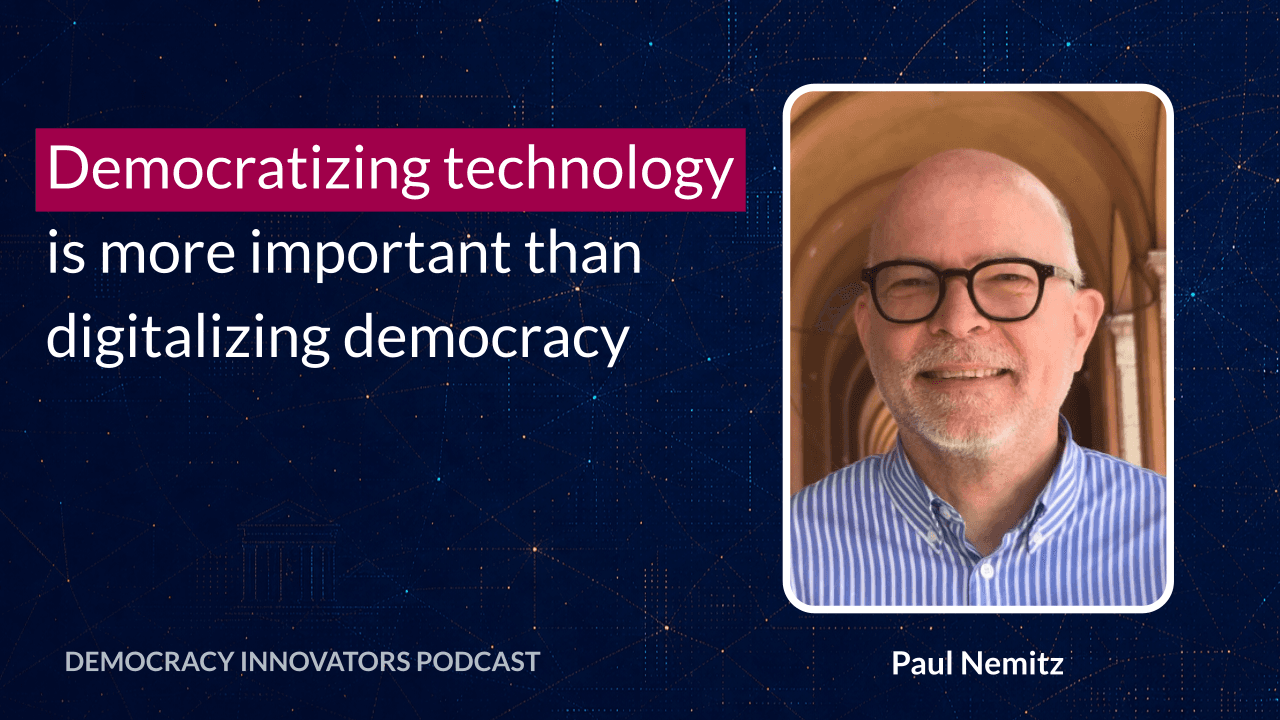
62Paul Nemitz on AI’s threat to democracy, Big Tech power & decentralization cover art

Oct 01, 2026

Paul Nemitz on AI’s threat to democracy, Big Tech power & decentralization

Paul Nemitz examines how concentrated control over data, infrastructure and AI can weaken democratic life, and argues that these technologies are not politically neutral. Drawing on his experience with the GDPR and other EU digital legislation, he discusses regulatory enforcement, the limits of trea
Open conversation →
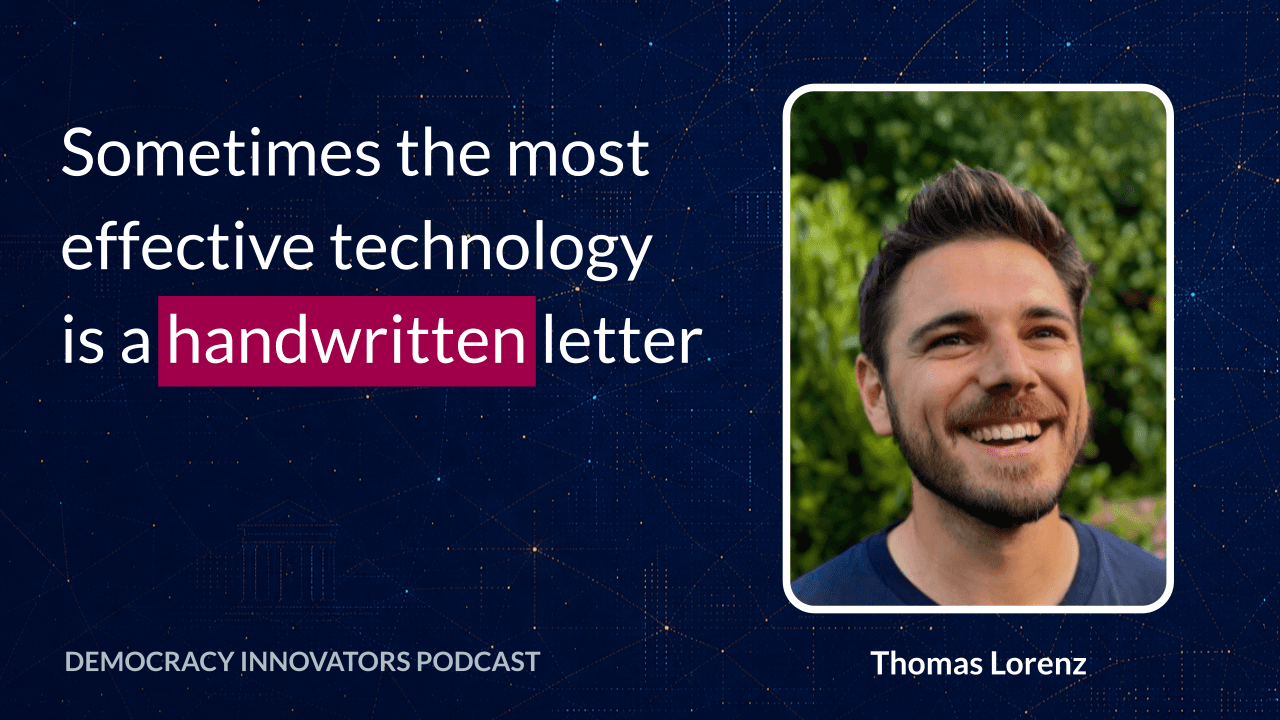
61Thomas Lorenz on Brief nach Berlin, lowering barriers to participation & open-source civic tech cover art

Sep 22, 2026

Thomas Lorenz on Brief nach Berlin, lowering barriers to participation & open-source civic tech

Thomas Lorenz discusses Brief nach Berlin, an open-source, AI-assisted tool that helps citizens identify the appropriate political representative, draft a letter about a local concern and then copy it by hand. The conversation uses this practical project to examine how civic technology can lower bar

Open conversation →
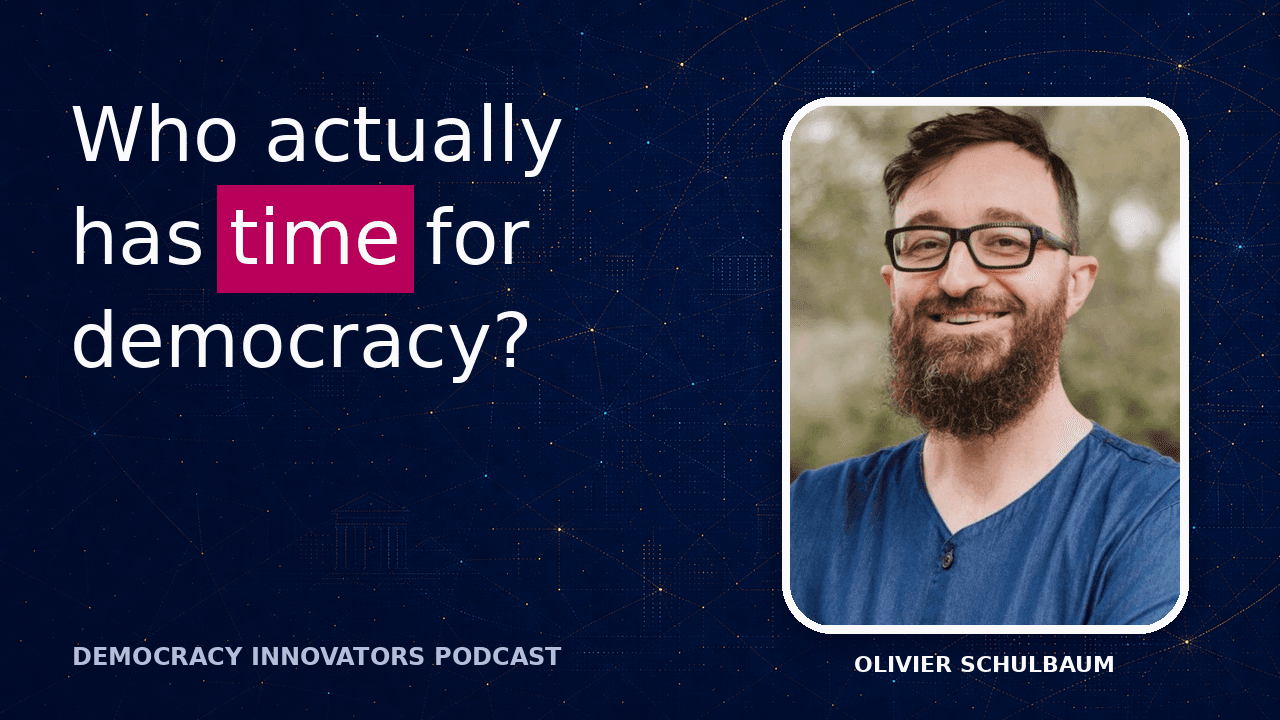
58Olivier Schulbaum on GRID, collective AI & slowing AI in democratic deliberation cover art

Sep 01, 2026

Olivier Schulbaum on GRID, collective AI & slowing AI in democratic deliberation

Olivier Schulbaum discusses how Platoniq and Goteo connect civic technology, culture, social innovation and democratic experimentation. He examines citizen assemblies through affective legitimacy, enclave deliberation and art-based methods, arguing that those most affected should help set the agenda

Open conversation →
57Ryan Koch from the Civic Tech Chat podcast on civic innovation and effective use of AI cover art

Aug 25, 2026

Ryan Koch from the Civic Tech Chat podcast on civic innovation and effective use of AI

Ryan Koch, host of Civic Tech Chat, joins Alessandro Oppo for a cross-podcast conversation about how civic tech has evolved from volunteer networks into a professional field—and how AI is changing what people can build for the public good.

Open conversation →
56Gianluca Misuraca from Inspiring Futures on AI in the public sector cover art

Aug 12, 2026

Gianluca Misuraca from Inspiring Futures on AI in the public sector

Gianluca Misuraca of Inspiring Futures Europe, coordinator of the European Union AI Skills Academy, discusses how foresight can help societies shape technological change. He explains why democratic control of AI depends on digital sovereignty, public-sector skills, interoperability, better procureme

Open conversation →
55Alvaro Oleart on the instrumentalisation of EU participation processes & limits of AI for democracy cover art

Aug 04, 2026

Alvaro Oleart on the instrumentalisation of EU participation processes & limits of AI for democracy

Alvaro Oleart is an academic researcher at the Université Libre de Bruxelles. In this episode, he discusses citizen assemblies, EU participation, Big Tech, AI, collective actors, social movements, and why democratic innovation should avoid depoliticized shortcuts.

Open conversation →
54Alberto Fernandez Gibaja from International IDEA on Technology and Democracy cover art

Jul 29, 2026

Alberto Fernandez Gibaja from International IDEA on Technology and Democracy

Alberto Fernandez Gibaja leads International IDEA's global work on technology and democracy. In this episode, he reflects on digital sovereignty, AI governance, data rights, representative democracy, political parties, and why democratic societies need political will to shape technology.

Open conversation →
53Simon Horton on Negotiation, Conflict Resolution, and How AI Can Help End War cover art

Jul 15, 2026

Simon Horton on Negotiation, Conflict Resolution, and How AI Can Help End War

Simon Horton is a negotiation expert and author of The End of Conflict. In this episode, he discusses collaborative negotiation, political conflict, peace processes, deliberative democracy, and the potential role of AI in helping societies resolve disputes.

Open conversation →
IT 03Kenobit on Mastodon, the Fediverse, and Decentralized Social Networks cover art

Jul 02, 2026

Kenobit on Mastodon, the Fediverse, and Decentralized Social Networks

Kenobit, also known as Fabio, discusses why decentralized social networks and the fediverse are not just a technical alternative to commercial platforms, but a political issue. In this conversation, we talk about Mastodon, ActivityPub, algorithms, engagement, moderation, non-proprietary digital spac

Open conversation →
51Alice Casiraghi on designing regenerative systems, public services, and democratic participation cover art

Jun 30, 2026

Alice Casiraghi on designing regenerative systems, public services, and democratic participation

Alice Casiraghi is a systemic designer working on sustainability, circular economy, regenerative systems, and public services. She is a European Climate Pact Ambassador, teaches at Politecnico di Milano and created Climate Cards to educate on environmental impacts. Through her systemic approach, she

Open conversation →
40Yuting Jiang on the Agora Citizen Network, Polis and bridging-based algorithms cover art

Mar 10, 2026

Yuting Jiang on the Agora Citizen Network, Polis and bridging-based algorithms

Yuting Jiang explains the Agora Citizen Network and the use of Polis-style, bridging-based algorithms to surface areas of agreement across divided groups. The conversation explores how online participation can avoid simple majority logic, identify constructive consensus, and support democratic processes where citizens contribute ideas without being reduced to partisan camps.

Open conversation →
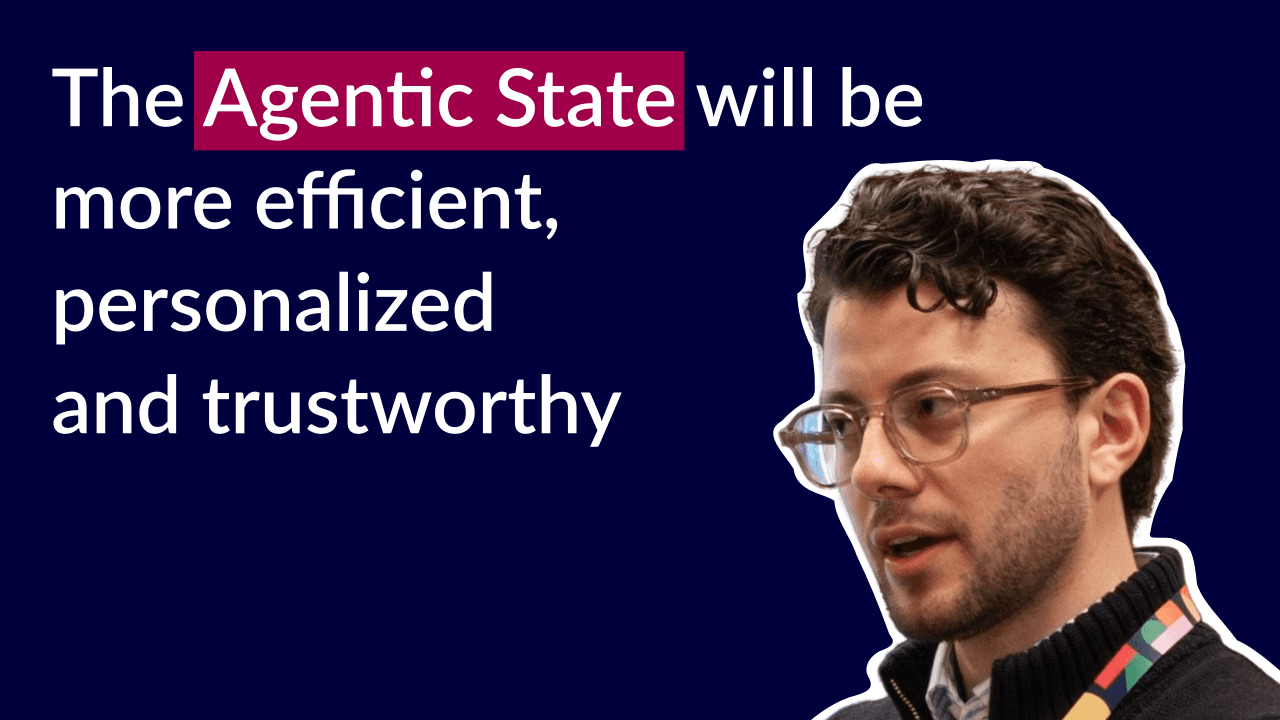
34Simone Maria Parazzoli about the Agentic State and how algorithms can transform governments cover art

Jan 06, 2026

Simone Maria Parazzoli about the Agentic State and how algorithms can transform governments

Simone Maria Parazzoli discusses the Agentic State and the possibility that algorithms could transform how governments operate. The conversation examines AI agents, administrative capacity, public services, democratic oversight, and the tension between more responsive state systems and the need to keep political authority accountable to citizens.

Open conversation →
Page 1 of 2Older →