Automatic transcription, there could be errors.
Alessandro Oppo (00:00)
Welcome to another episode of the Democracy Innovator Podcast and our guest of today is Witze von Rasbich. Thank you for your time and for being here. Thanks for having me. And I mean, you're working on GoVocal, right? And ⁓ yeah, how did it start? If you would like to tell us something. Yes, yes, yes.
Wietse (00:07)
Nice. Great.
Thanks for having me.
Mm-hmm.
Yeah. Yes, yes, yes. ⁓
It started now more than 10 years ago when ⁓ myself and my co-founder, Aline, when we were still studying in Brussels, we started a company ⁓ as students, students who were... ⁓
Alessandro Oppo (00:30)
started
Wietse (00:47)
in love with the city they just moved to, to our capital, to Brussels, but could also see like many things that didn't go too well in the city. And we had many ideas for our neighborhood and, and you know, we, we, we, we wanted to kind of co-create and co-design some of the public spaces that we often experienced as residents ourselves. Now we went on this, on this initial exploration of how do we most effectively make our voice heard as a resident here in Brussels. And,
it was a pretty kind of disappointing expiration in the sense that we could back then download like a PDF form on the city website, fill it out, send it in. ⁓ And then, you know, in the best case get 30 seconds to speak at town hall meeting. we were like, hmm, in digitally connected worlds, it feels like the way that's.
cities engage with their residents can really be upgraded and can benefit from a way more modern approach to it. So then we got started on little prototype and started working with the first cities that were especially interested in engaging more youngsters, especially young people, because at those town hall meetings on that Tuesday night, you always get to see like the same 10 people and typically you don't have many young people engaging.
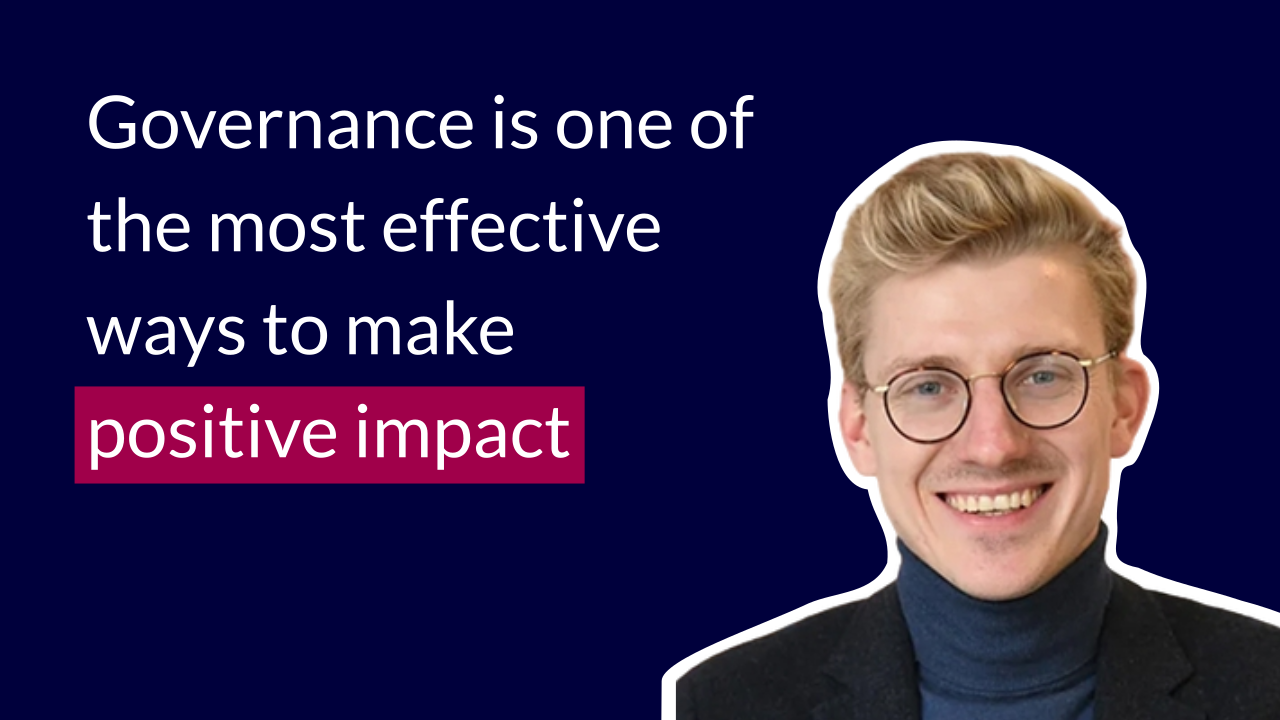
So that's how we get started with First Cities. But maybe taking a bit of a step back, the reason why, 10 years in now, I'm still super passionate about kind of what we're doing and feels still very much as if there's so much work to do is because I think governance altogether is one of the most effective ways to ⁓ make a positive impact in this world. The decisions that our governments make, they impact the lives of millions and billions of people.
⁓ So if we can find better governance structures, power structures, better ways to make decisions, then ⁓ yeah, it has a fantastic impact. And ⁓ when we started out, one framework that I like to think in is like, in terms of ⁓ how you can make a positive impact, one advice I've heard is like, look for problems that are one, ⁓ obviously solvable, and which is clearly the case here, the technology is there.
two that are large, which is also the case. mean, so many governments out there, public sector is huge. And three that are neglected. And I think very much ⁓ it has been very much neglected as a problem. How do we build better governance, better and true citizen participation? So ⁓ especially when we started out 10 years ago, working with the public sector, working with government was ⁓ totally not done. Now there is like a civic tech and a GovTech.
know, spaces, but they didn't exist back then. So it's been also really interesting to see the field emerge and grow, ⁓ which has been really good to see. But that's kind of, yeah, how we initially started out.
Alessandro Oppo (03:50)
And about the platform, how does it work for the citizen or for the user?
Wietse (03:57)
Yeah, so
Go Vocal, previously we went under name of Citizen Lab, we changed our names about two years ago. ⁓ Go Vocal, we offer a digital platform for citizen participation, so for residents to have a say on local plans, local projects, local decisions. I'm saying local because typically we work with cities, municipalities, local governments. So we work with about 500 ⁓ cities and local governments worldwide.
⁓ in Europe, in North America, but also some work in Latin America and Africa. ⁓ And how it works is for the residents, you've got different ways of making your voice heard. So they can go from sharing within a local project, whether it's the creation of a new park or a mobility plan, sharing ideas, opinions, ⁓ going into dialogue with other residents through commenting, voting. ⁓
you know, like voting also for prioritization in participatory budgets. So there's all sorts of ⁓ tools to participate within the projects of the city. And then there's also more bottom up tools. For instance, through proposals, citizen proposals that you can come up with your own proposal, gather a minimum number of votes, and then the city will take your proposal into consideration and give feedback to you. So that is very much for the residents where the idea is really to keep things ⁓ pretty.
pretty simple and straightforward. And then most of the horsepower for the city really sits in kind of the back office system where they have the tools to manage all their projects to get a better understanding of what citizens have said, also using sense-making tools to do easy reporting. And what we're right now very much focused on is how we build digital democracy and citizen participation really as part of the infrastructure of how
city works. So that means it's not just one team or one person working on citizen participation, but it's something that is distributed, that is sitting within all the different departments. So from like the parks and recreation to the planning department to the culture and youth department, getting all of them to use the platform for the different projects. So we're very much also focused on how in the back ends, in the back of the system, how do you make people within government work together? ⁓
how do you make that whole workflow of running a participatory project as simple and effective as possible? That's what we're really focused on because our whole theory of change, our change-making theory is like we partner with the governments and we need them as the ally, we need to enable them because it's from within that we get to create change and to get it with them. So the more people within government that we can have.
change their way of making decisions or running their projects, the more impact we will have with the residents in the second instance. So that's why we're very much focused on like how do we facilitate the internal adoption and make it easier for the government administrators to work with the platform.
Alessandro Oppo (07:06)
Okay, 500 towns are a lot.
Wietse (07:10)
Yeah, we started out in Belgium. So I'm from Brussels, Belgium, and then from there to the Netherlands and then to other European cities in the UK and then since about two, three years or so, also more in North America and the US.
Alessandro Oppo (07:29)
And do you know, I'm sure you know, example of a town that used the software in a very particular effective way? ⁓
Wietse (07:42)
Yeah, ⁓
so it depends on, of course, different, the multiple use cases, but maybe I'll just share a couple of examples. ⁓ I'll try to think of like different geographies a little bit. Maybe let's start first in Europe, in Denmark, the city of Copenhagen. So they use GoVocal exactly for what I was describing earlier with the proposals.
So they launched what they call the Copenhagen proposal. And they launched with the platform to collect bottom-up proposals from residents. There have been more than 20,000 residents in the last year who have been submitting a proposal or have been voting on a proposal. And those proposals, as soon as they hit the threshold of 2,500 votes, they go to council. And it's been a very effective... ⁓
one lounge strategy because they managed to get in a very short period of time, more than 20,000 residents on the platform, just because it's like very much focused on let's reimagine Copenhagen and hey, you can have a direct impact. So it was very empowering. It's been a fantastic lounge strategy because now they have all the different departments coming on board and they can start, you know, running their project with already very active and engaged resident base. But to it has also been a really good.
⁓ illustration of direct impact that can be made. have been some proposals already accepted and implemented. One for instance about ⁓ there's been a group of residents who proposed a better better treatment and follow-up to ⁓ young people who grew up in abusive homes so who had parents with drug or alcohol abuse that they could get a treatment within 90 days ⁓ and this proposal got accepted and implemented.
I think it's a great example of social change that really was initiated by the bottom-up. ⁓ And ⁓ it's very important for cities to showcase those success stories because that is what is going to give trust to the residents. If they see like, hey, wow, know, like six months ago, this got proposed. Now this is happening. It's, think, fantastic example of change and what they do really well. And in general, what we really try to push for is
Closing always that feedback loop, always going back to the citizens saying like, hey, this is what has happened with your proposal or with your idea. ⁓ So that's Copenhagen, maybe second one. We go to the UK to the London Borough of Newham, ⁓ which is in the center of London. London consists of many different boroughs and they have a very...
broad kind of rollout of our platform. have about 200 internal project managers from different departments using the platform and a very engaged resident community of, think there's about like 25,000, 30,000 residents who are actively participating. They have one flagship program called People Powered Places. And it's a program that goes in two year cycles and have 1.7 million
⁓ British pounds that they allocate to this program in which they are first setting like priorities for the borough, then collecting ideas from the residents for new projects. Residents develop those together, those ideas to projects, assign like a budget tag to it, do a big vote on what are the projects that need to be implemented. And then there's like a whole follow through in terms of implementation and residents are also being part of the code design. There have been more than 300
citizen led projects that have been implemented already. So it's also, I think, a really good illustration of like direct influence of residents. And what's really interesting is they do at the end of each cycle, a very thorough review of what's been the impact. And in the last cycle, they got to a percentage of 89 % of the residents saying that they feel much more connected to their borough after participation in this program.
which was just a fantastic data point to also illustrate the influence it can have if people have a say and if they can have an influence on decisions. ⁓ So that's in the U.N., maybe then a very last one. Let's maybe cross the Atlantic and go to the U.S., the city of St. Louis. They had an exceptional ⁓ big settlement fund of $250 million. They had a sports team, an American football team that moved out of...
city of St. Louis and they had to pay like a settlement fund through the city. And St. Louis, why this is such an interesting case is because St. Louis is a city that is historically pretty segregated. There is not a lot of investment going into the northern part of the city. Most of it is concentrated in downtown and southern parts. And the board of aldermen couldn't really agree on how they should allocate those $250 million that settlement fund. So they said,
Okay, power to the people, we're gonna do this in a very participatory way. And ⁓ they created the platform Speak Up St. Louis, where they took a very ⁓ methodological approach to assigning this budget. They first collected ideas on like how do you imagine St. Louis 2040. ⁓ In second instance, they asked about what are the main challenges you're experiencing. Then they connected those ideas to the challenges, worked with the different city departments to scrutinize
different ideas, develop them into projects, and again have more than 15,000 residents from the city of St. Louis vote on those different proposals. What came out as the first proposal was actually more investment in water infrastructure, water mains, which was for them surprising because it's not kind of the most ⁓ or the sexiest idea, if see what I mean, like it's something very much under the surface, but it was very interesting because it spoke to...
that citizens really know what is critical in terms of infrastructure for the city. ⁓ And then they, after this voting process, the citizens were able to actually co-draft legislation. So there was then finally a bill that got submitted and that got approved, but citizens also had the chance to ⁓ react to draft proposals, to draft bills. And what's been important is that through...
One, having so many people participating, but two, also having data on the representativeness of the citizens. This got very much ⁓ more quickly supported by the Board of Eldermen, which was previously divided, because they knew like, hey, this is actually a representative sample. And I think that is also where really power lies of civic tech platforms. If we are able to demonstrate, this is not just the happy few that are participating, but this is...
a representative group of people, ⁓ then of course it really reinforces the chance that politicians, policymakers will listen, will potentially implement some of those ideas. So yeah, those are just three examples and maybe one last quick thing that I will say is something I'm really excited about right now that we're doing is we're working with, ⁓ it's called the American Forum. ⁓
a group of organizations together with three different states in North America, ⁓ in South Carolina, Nevada, and New Hampshire, purple states, wing states, where it is a cross-partisan initiative to have large-scale deliberation on some of the biggest issues in those three different states. So, a very, very important initiative, I think, because especially in the United States, being so polarized these days.
It's so important to show like, we can find super majorities. We can agree on so many things. It is possible to find common ground and have it lead to action, you know, not just like having talks, but actually bring it to state, to the state government and turn it into policy. So that's something I'm excited for 2026.
Alessandro Oppo (16:10)
And thinking about, let's say 2036, how do you imagine society or like... Yeah, I mean, sometimes I think what if technologies ⁓ is used by politics, by politicians and also by the people.
So I wonder what will happen in 10 years or 20 years and how.
Wietse (16:40)
Yeah.
I think that given what we're seeing in the world right now, where there's like a total shakeup because there's more and more oligarchies emerging and we see that with rising inequality and concentration of power, that it leads to structural problems in society. think that, yeah, better governance system, more distribution of power and true more citizen participation is going to be.
pretty critical to find solutions to those structural challenges of inequalities and concentration of power and then the corruption that comes with it. So I'm feeling pretty hopeful about this, about like building more resilient and...
democratic communities, how important it is for some of the big societal challenges going from climate change, rise of AGI, and to all the warfare that we're seeing in the world. I think on the very big picture, I think that is what really also motivates me, that it's about power redistribution, it's about...
a group of people collectively, you know, finding common ground and agreement to move things forward. ⁓ And that's particularly one, to make it a bit more concrete, research, one data point that I really like, ⁓ because it kind of confirms what I'm just saying. From the OECD in 2024, they looked at like, what are the factors that influence trust in our institutions, in our governments that influences that most?
And they found that actually the single biggest influential factor is whether people feel listened to or not. This, if I remember well, was about like 22 % of the residents who don't feel listened to, have high trust in government, but that number jumps to 69%. If people feel heard, if they feel listened to, if they feel they can have an influence. So like the ability to actually, what they call political efficacy, so the ability to be able to change.
and influence outcomes policies is one of the most important factors to trust in each other and in our institutions. So that's why I believe that in coming years we will only see more participatory approaches. ⁓ I think also there's been really interesting work in the deliberative space and with assemblies, but at the same time we've come to conclusion that, this doesn't scale too well. ⁓ So what is the magic combination of...
bringing more deliberation into digital participation and having that at times also combined with the ⁓ deliberative practices that we've seen from assemblies. So I think we're still looking for some of those models, but I'm sure by 20, what was it, 2036, ⁓ we should have found the answer, hopefully already in the next two, years.
Alessandro Oppo (19:40)
Also 2036. I was also thinking about this trust in institutions that many times, you know, because people are voting less than before and...
And in some way they say, ⁓ at least in Italy I've heard it many times that people don't trust institutions anymore like it was before. And in some way I am also like, but this is good, people should not trust institutions. They should collaborate maybe with institutions. ⁓
And it's something that ⁓ I think that maybe nowadays with technology or like in 10 years, then it could become also easier. don't know if with a sort of, know, technology could also enable a sort of direct democracy or maybe it could be a not direct democracy, with some, don't know, maybe in my neighborhood, I can decide things in a sort of direct way, but not that... ⁓
Wietse (20:49)
Right? But I'm a little skeptical of going too much for direct democracy because I think one of the threats of digital democracy is that it will lead to more of an individualization and like an atomization of citizens in democracy. What do I mean by that? If we all kind of are being reduced to like, hey, we can vote directly on things and those things will be implemented.
Alessandro Oppo (20:50)
this
Wietse (21:19)
the power of a democratic discourse is that it has the ability to transform us and to change our perspectives. I think we got to really build listening into the way we design digital democracy. if it's going to be too much like a sum of individual votes, then I'm afraid that it leads to more of a individualization, lack of empathy, lack of understanding. And I think that is what we need most at this in these times is like
We are already being so much in our bubbles. How do we get different groups to connect with each other, to listen to different perspectives and get an understanding of that? So that's why I think the power of digital democracy will sit in being able to better map different perspectives in the community. There's also no such a thing as de-citizen. There are many different groups and it's about showing really the diversity of opinions, showing minority voices as well. ⁓
I think this will be really important that it's not gonna be just a tool that also can be misused for going only in with like, hey, here is the majority vote and very ⁓ populistic rhetoricism, but that it can also be used to actually get to more nuanced views and more deliberative ways of coming to decisions.
Alessandro Oppo (22:41)
No, yeah, absolutely. Yeah, I totally agree. Also, when I say direct democracy, maybe I was thinking about a different way from the representative system. But at the same time, yeah, I totally agree about also, I think that something that we should do is to find a way to not use the majority vote.
Wietse (22:57)
Yeah.
Alessandro Oppo (23:10)
as something to decide because in some ways also, I don't want to say that, yeah, violent, because it's not taking into consideration the other point of view, why there are people that are voting against. yeah, I think that old voices should be heard. And also sometimes,
Wietse (23:27)
Mm-hmm.
Alessandro Oppo (23:35)
This is something like that. I mean, maybe we disagree with words, but we agree inside. Let's say we mean the same things, but we use different words.
Wietse (23:43)
Yeah, exactly.
Shared values and shared kind of maybe shared needs. I think that's part of building the rights participatory process that you bring people back to, hey, what are our shared values as a community and start from there because indeed things get lost in words and in semantics and in... ⁓
Alessandro Oppo (24:02)
get lost.
Wietse (24:06)
in those things. just reacting back to what you were saying on the direct democracy, what I do think is a very good thing is when ⁓ citizen's power gets codified, So when citizen voices in ⁓ decision making, when that gets codified, so for instance, an example is the...
Alessandro Oppo (24:08)
I'm back to what you were saying.
Since power gets codified...
Wietse (24:29)
write for citizens initiatives and you say like, hey, so many votes and then we commit to actually responding, council responding to proposals. I think that is great. And that is something we're seeing more and more often in many countries that there is more and more regulation coming around participation. For instance, in the Netherlands where ⁓ they initiated, I think it was last year or two years ago, the Spatial Planning Act, all spatial decisions require a clear involvement of the citizens.
For every decision being made, ⁓ governments have to show how they engage citizens in their decision making. I think those are really important ⁓ regulatory changes that will create also more of a culture of democratic participation. ⁓ So that's what I'm hopeful about.
Alessandro Oppo (25:17)
You met me, I I had a call with Jorin from Debrey some time ago and we were reasoning about the attitudes towards participation in different countries and he was saying how the Netherlands is a good place to do participation.
And also because there is always this tension and it is related to power about ⁓ are we going to give power to the people or like are we going to give power for ourselves and this is also something that doesn't happen of always in a very conscious way I think like maybe you would like to give power to the people but then you
you see that you don't like what the people decided and so you want to decide by yourself because you think that your idea is better than what the people decided. And I think that this happened many times and it's something that of course is not building trust in institutions or in participatory approaches. ⁓
And yeah, still, because I see it as a sort of, ⁓ I don't know how to solve this issue. Like it's a sort of open question in my mind. I don't know what are your thoughts.
Wietse (26:52)
So the question of like how the connection between what people say and what the final decision is, like those are often misaligned.
Alessandro Oppo (27:00)
Yeah, let's say I don't know, I'm a municipality, I want to use Civic Tech software, but then I don't really like the outputs of the software. And so I am there and what do I do?
Wietse (27:11)
Yeah.
Yeah,
yeah, yeah. But I think the good thing is that even though it might not always, because sometimes there might be good reasons to not just go with the popular vote, right, and to go with what people are saying. But I think it's as much about good participation as much about explaining choices, explaining trade-offs. ⁓
making people understand why you're making specific choices. I think that is really ⁓ super important, really critical that you show those trade-offs and... ⁓
In the end, mean, in most cases, citizen participation is there to inform your decision. But again, there might be good reasons to go a different direction. It's about explaining why you had to make the decision. think that is really also when we think about trust, that is more important than just, hey, they've said this, so I got to follow this. The problem is when there is no feedback, when there is no transparency on like, hey,
we said A and you decided B and there and kind of it's not clear why, why, you know, the one doesn't follow the other. That's problematic. But I think like really good feedback, explaining choices, communicating those, that's where really the magic sits. And of course you should not, if you know like, Hey, ⁓
we're only considering three different options, then don't ask, hey, come up with your ideas to map all the different options out there. So it's also about like setting the right question from the get go from the outset and making sure that people can really influence things. If you wouldn't consider certain inputs, then refine your question to, hey, we're looking at those three different options. Give us your thoughts on those as opposed to like doing it to open-ended. So that's something.
we are advising also governments on is looking for every decision like what is the right methodology to use and what room is there to still influence the outcome.
Alessandro Oppo (29:22)
Yeah, these things about the feedback loop, I think it's very important because otherwise a lot of time can pass without real innovation and with a lot of frustration. And I'm thinking the same also about educational places like university and school. That is like when you are a kid you cannot really criticize how to wait and become a teacher, maybe.
Wietse (29:49)
Yeah.
Alessandro Oppo (29:50)
But it's a very long feedback loop. ⁓
Wietse (29:54)
Right. And that is sometimes a challenge, of course, like
making policy takes time. That's why I think for sure why today we see civic tech being used by local governments. One big contributing factor is this, that you can have short feedback loops and that when you're redesigning a park three months later, you can decide on the design of the park if you do like a new... ⁓
new, I don't know, like big policy and new regulatory change has to take, go through so many different steps that you lose people in the whole process. So that's why I think, yeah, local level, that's where the action happens and where you can give, keep those feedback loops short, but it is a challenge for more national, international level. So that's for sure. wanted to, but I forgot now, I wanted to react to something we were also discussed earlier.
and we'll come back.
Alessandro Oppo (30:53)
Actually, have a question about... So, GoVocal is working with ⁓ local government, municipalities... mean... ⁓ Directly with who? ⁓
Wietse (31:10)
With the cities, the local governments, municipalities, they are directly using the platform. So they are the ones who are on their local platform saying like, hey, these are the consultations or like the projects that we're running. So we are working with them and they are then engaging their residents in the local decisions.
Alessandro Oppo (31:34)
Okay, and because I was thinking at a national point of view, ⁓ they're not maybe Civic Tech software use the... I mean maybe use the... ⁓ Yeah, actually I don't know.
Wietse (31:54)
Yeah, but yeah, it is true there is way less use in a way on the national level, that's for sure. Something that we have done recently, but less than a year ago, is in the UK we have had a large...
conversation was called change NHS. It was about like the reform of the healthcare system for the next 10 years. So that wasn't a national level was with hundreds of thousands of participants was like very large-scale engagement and it was also interesting for us because we had learned from that ⁓ conversation that as you get to such a large-scale, you know engagement we need to think about
a different way to organize the dialogue because if you have like 12,000 inputs for a resident, it becomes impossible to navigate the conversation. So something that we've been building is what we call perspectives.
And it's a new way of actually exploring the ideas and the inputs from other residents where you can ⁓ have like a summary of what has been said already so that you can really identify where is the conversation happening and which different topics. ⁓ And also the way that we present the different ideas and the inputs to the end user is based on mechanisms such as representativeness ⁓ but also what we call wise voices. So we actually look in the
contributions for perspectives as in like if I say hey take your example on the education policy if I say hey as a parent
I experienced this and that. I am kind of illustrating my position and my expertise. So we're looking for that. We're also mining for that in some of the text. Just something that we just rolled out and I'm excited for, to have better ways of exploring each other's ⁓ ideas. In the end, it's really about mechanisms to listen better and to... ⁓
to find more common ground by identifying like hey where does the tension sit, where is the conversation happening and pointing and uses towards this.
Alessandro Oppo (34:03)
this perspective it's very interesting ⁓ because I also thought about it what happens if a lot of people participate and put their inputs and yeah it would be very interesting to see it and also a question is it like a sort of open like everyone can go on the website and see this sort of map of ideas or
Wietse (34:31)
Yeah, yeah, so everybody can go under. I can follow up with like a little example of how this looks like. But for any, yeah, let's say ideation projects where people can come with ideas, it's open and people can explore like where is the conversation happening. So yes, it's a better way to navigate the conversation really and to listen better. ⁓
Alessandro Oppo (34:32)
Okay.
Okay.
Wietse (34:58)
So yeah, I'm excited about it. But to the point, because now it came back to me what I wanted to say earlier about your question on like, hey, what happens if, if, if policymakers are not listening? I also just want to highlight that something we we are seeing now, and it's obviously a global phenomenon that governments are working with decreased budgets. There's like everywhere, austerity, and there is everywhere like, hey, we're under budget pressure.
And we see more and more of the cities and the councils that we work with actually also engaging their residents on those tough questions, on the trade-offs, on like, we got to find 20 million. What are ways that we can get to those funds? So what should we de-prioritize in terms of investment?
This very recently, think last couple of weeks, Sterling in Scotland, Sterling Council, they did a phenomenal job like getting thousands of their residents to actually engage on how are we going to save money. So just to say, it's also, it's a way to get also support, buy-in and understanding from.
your community and your residents by not only presenting the easy things, but also the difficult questions. ⁓ In the Netherlands, for instance, there's ⁓ everybody has to, or every municipality has to ⁓ welcome a certain percentage of asylum seekers. And there are often conversations on the platforms of Dutch municipalities happening around, should we open like a center for
to welcome asylum seekers in our municipality. And it's interesting to always follow that because then you see that often the conversation goes really beyond not in my backyard thinking. in most cases, people are supportive for it actually, surprisingly. So again, it's a way we read in the news and in the big media, hey, you know.
not in my municipality and you read about kind of how things get boycotted. But if you look at like really the majority of people, what their attitudes are towards it, you see that often there is way more supportive behavior and participation can be a good way to map that and to make that clear and to go beyond just the loud voices, the loud voices who would otherwise complain. Again, you show the data, you show like, look, this is a representative sample of our residents being...
for this and that reason in favor for this. ⁓ So that's what I think is also important for this many tough choices. And again, it's about explaining those choices, explaining those trade-offs. And that's where participation can really help.
Alessandro Oppo (37:49)
And I would like to ask you something about your background. So personal background, what have you studied and so on.
Wietse (37:59)
Yeah, I have studied ⁓ what's called commercial engineering. ⁓ So no political science, but I've always been very interested in political systems and I've always been following ⁓ politics very closely. So I've always been really passionate about democratic functioning and politics. But I don't have a background in political science. I come more from an engineering background.
Alessandro Oppo (38:30)
And if you leave the inbox always or no?
Wietse (38:35)
⁓ Yes, most of my life as in like I've come here to the city when I was 18. I've actually, growing up I lived on the countryside in Belgium. And for me coming to the big city and seeing like the diversity was pretty eye-opening and I find it so fascinating. ⁓ And again, that's why...
You know, being here in the city and being constantly in all of like, um, of the city. love the city, but I also felt like, there's much more that we can do in the city and we can do much better. So that's why I initially came up with, let's try to get a platform for Brussels so that we, you know, make things easier here that we can communicate our ideas. Cause we needed to hear also in Brussels. We've got, we just came out of a period of more than 600 days without a government, um, Belgium.
and particularly Brussels comes with its complexities because you forget French speaking community, Dutch speaking community and typically those two language groups they form independently their own government and then they merge them, they put them together like the Dutch and the French speaking part but this time they didn't accept each other's coalitions ⁓ and they have been into an impasse for a very long time and I think it's just really interesting what has happened here because
you feel that it drains the city and the community and there's a need for renewed energy, more imagination, stronger DNA. ⁓ It's a fascinating place to live in, think, Brussels because there are no majority groups here. It's a collection of all minority groups and ⁓ it's an experiment also in living together with differences ⁓ when there's not just like one unified group, but there's so many different groups. How do you...
find coalitions, social contracts between all those different groups. It's not always easy. And again, it's matter of then thinking through like, what is the right way to build a political system, to build a governance system? And I think we clearly have to do some work here in Brussels because it's the whole system of Dutch versus French is too outdated. Also because a big part of the city and of our region consists of non-French or non-Dutch speakers.
with the European institutions for instance. So it urgently requires an update the way that we govern our city.
Alessandro Oppo (41:07)
Yeah, I was thinking that this is something that is not very... ⁓ like why also politicians maybe don't use the app to maybe solve a conflict, to make a sense of what they're saying and it would be very cool to see maybe a citizen assembly of let's say these three different parts of... or maybe they did it.
Wietse (41:33)
Yeah. But typically
⁓ the politicians, get the final reports and what's been said, but they are not using the platform directly. And in most cases it's for good reason because there's also just kind of this Chinese wall between what does the administration do and what is like the political level. And I don't think it would be desirable to have politicians directly using those tools. They, of course, again, need to be informed and get the results.
But running the actual process is done by the administration, I believe, for good reason.
Alessandro Oppo (42:10)
No, yeah, sure. will not be... Let's say we are not ready to use platforms for everything. And also, I mean, we still have a couple of minutes. If you... What are your next ideas for the platform? What are you struggling at? I don't know, there is a problem you want to solve, but you're...
Wietse (42:31)
Yep. Yep.
Yeah, yeah, yeah.
So we already talked about a couple of those things. One is ⁓ scaling online deliberation, having better dialogues ⁓ when many people participate, having better ways to listen to each other, to find common ground. So the whole digital deliberation piece is something that we've been working on a lot and will continue to work on. ⁓ We really want to crack that because...
Again, think many, especially local governments, they don't have the resources, the budgets to run an assembly. ⁓ But there needs to be an alternative to still talk about those contentious issues, those difficult topics in a deliberative way. So, ⁓ yeah, we're very much thinking about how do we bring more deliberation into digital participation and finding new methodologies to listen better, to find common ground, to bridge. So that's one.
And then, ⁓ yeah, two is, as I also said, like really turning our platform into infrastructure, getting it connected to the different systems that the cities work with, ⁓ having really good reporting, having good ways of working together ⁓ between different departments. that's kind of the non-visible, it's not visible on the public side, it's all happening more in...
in the backend and in the management system, but I think super important because if you have good adoption there from there, then you can get to really exciting projects. ⁓ lastly, something I would love to see happen in the coming years is ⁓ the way that we could also integrate different levels of government because let's take Brussels as we were just talking about it. Brussels consists of 19 different
municipalities that make up the region and then you have our federal level, European level and so on. But so often it's not clear where kind of certain responsibilities sit. And I think as a resident, it would be great to have a more citizen centric experience where maybe some of those levels can be integrated. So also to your point of ⁓ interoperability, you know, if we could have platforms that are
Interoperable and that as a resident I can see like how I could engage in my neighborhood in my city my region in my country in my European level That would be I think the dream to have that kind of all combined so that you don't have to go to ten different platforms or portals So that's something I'm excited about as well and I think overall really a challenge is I think we've got strong models for
the let's say the bigger cities, the mid-size and large cities, because they have the resources and they do a lot of participation. For the small towns, it's more challenging because they don't have the time and resources always to work in a more participatory way. They sometimes also don't have the expertise. But there's obviously thousands of those small towns. So finding a functioning model to have them also like more...
rural areas work in a more participatory way is think a particular challenge. And the challenge there might be also that civic technology has matured over the past couple of years and the same for our platform. know, it has super powerful, but it can also be daunting and overwhelming to a small town. So it's also for us a matter of like keeping things simple enough and thinking of those different levels with.
They each have different needs. Like a national platform looks very different from like how a small town will use it. So I think we've come to this point that we need to think about it in different ways, like different, it will look differently for each of those different governments and just one size fits all is not good enough.
Alessandro Oppo (46:35)
And just a very quick message if you have one for the people that are working in the field, so civic tech field or other similar fields.
Wietse (46:47)
Yeah,
I would say for sure work with, assuming that you work with governments, ⁓ build a community and network between those governments. ⁓ I think that's really where for us a lot of the magic often happens is when we bring those different cities or governments together. So we do a lot of that. We do like monthly community sessions and actually
Last week we had both in the UK and one in Brussels here where we also flew in cities from different European countries. And that's been ⁓ super fruitful to discuss new ideas, to discuss challenges, to ⁓ co-design new things. So I would definitely recommend to really as a civic tech organization to invest in that. Work closely with your end users, with the governments. ⁓
they have always just great perspectives to add. So that would be, I think, my number one advice to everyone working in civic tech.
Alessandro Oppo (47:56)
Thank you a lot, Viet. It was a pleasure for me.
Wietse (47:59)
My pleasure, thanks Alessandro. Great talking
to you.