Automatic transcription and translation, it can have errors. The original italian transcription is after the English one.
Alessandro Oppo (00:00)
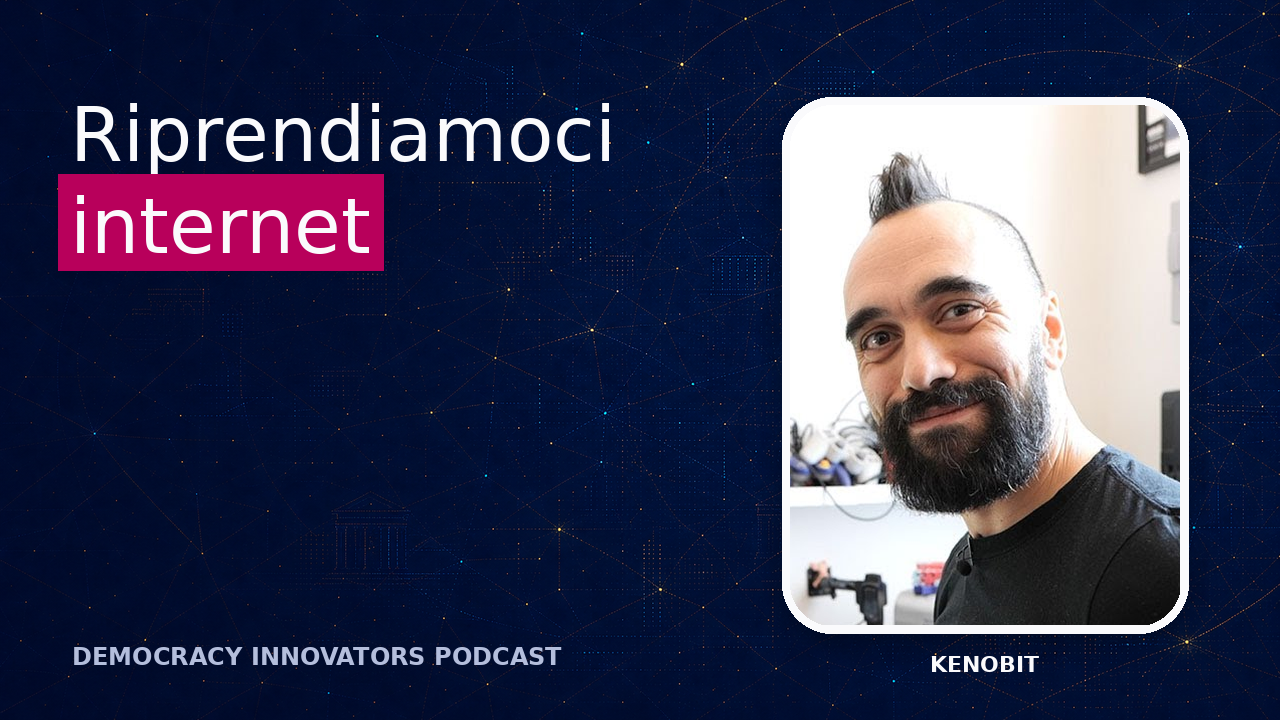
Welcome and welcome to a new episode of the Democracy Innovators podcast. This time we are here with Kenobit, Fabio. Thank you Fabio for agreeing to participate.
Kenobit (00:14)
My pleasure, thanks for the invitation.
Alessandro Oppo (00:17)
And yes, there was this one I see you very busy with decentralized social networks.
Kenobit (00:23)
Just a little, yes.
Alessandro Oppo (00:26)
Here, if you would like to tell us a little why, what was it, maybe even if there was a moment in your life in which you said, damn, could this thing be useful? That is, in the sense that it can be truly useful to people.
Kenobit (00:38)
So it was a 2-phase thing, in the sense that I discovered the existence of Mastodon and then of the fediverse many years ago at Then the moment in which rather than saying they could be useful to people, I thought they were a necessity, in the sense that centralized commercial social networks were bad for us, it was during Covid. During covid we during the lockdown we suddenly had a moment of hyper online. We were already a society that was online a lot, we found ourselves collectively forced to spend hours on work, on whatever stuff. There were even people who did the shopping online at that point and we were on social media a lot. And that's where I think all the problems came to light. Or rather, it's not that 1st the problems weren't there, they were and were the same, but there is that moment of acceleration which among other things hasn't been reabsorbed because the aftermath of how much we were online more during Covid is still there now. But I really remember that at that moment it became clear to me. I saw the people that at a certain point in that moment I realized that I could no longer read a book. And how come I couldn't read a book anymore? I realized that I spent the day reading people arguing on the internet. Always the same 4 bullshit. Still now I don't want to go into the merits of the issues, but there was that moment when there were vaccines yes, vaccines no And there were those who said no, you're an idiot, you're ignorant, no, you're a sellout. And I remember how much time I spent watching people argue. So I said ok, it's not that I can't read anymore, it's that I spend the time I used to dedicate to reading a paper or digital book, I spend it reading complete strangers who argue. Always in the same way on increasingly polarized positions. And why were those people so polarized? And those those those positions? Because it's easy to say oh well, people have become stupid, people have become bad. But no, there have been some very interesting links for many years now. They are called Facebook papers, a Facebook employee who among other things anyone searches on Wikipedia, also in Italian there is a nice article on Facebook papers and it turns out that Facebook has found that arguments increase engagement. And Meta and in general all centralized platforms earn based on how much they are used, because if you use the app for 2 hours instead of one you have seen double the advertising and generated double the personal data. All commercial apps like Facebook, Instagram, etc. blindly try to dramatically increase the time you use them. And Facebook's internal data, the data that we gave them because our usage data showed that arguments are the best posts, because it turns out that if you and I argue, well you and I continue to be on the platform and what's more our argument is watched for the same phenomenon that people stop to look at accidents on the motorway. And then maybe someone else comes along and that someone else says no, Alessandro is right, no, Kenobit is right, etc. And so at that moment I said not only are we getting stoned, it's not that we aren't the ones who are getting stoned. The platforms that have become our meeting point for sociality, the new little square, the new wall, are privately owned and are structured not as places to make us talk to each other, but as cages to make us argue. Where among other things and then obviously this was the spark for me, because right during Covid I said, but here we are going to pieces, we are going to pieces, if people are no longer able to talk to each other we have a giant problem and I believe that people will no longer be able to talk to each other if our meeting places have become shopping centres. Okay, we had a small technical interruption, I'll take it back and say at a certain point I realized that the extremely pro thing wasn't that we had become stupider, more polarised, more evil, less able to compare ourselves with each other. Our meeting place had simply become a shopping mall. A shopping center among other things managed in the most predatory way possible and therefore it seemed crucial to me that for any battle of all types on all fronts, we had a place to discuss and that we had a place of sociality designed to make us socialize and not to compete to sell more advertising. Then there are obviously many other reasons why decentralized social networks are important, but for me the spark was this. Well, I really realized that we were caged animals goaded by digital capitalism to fight among ourselves, to generate profits for third parties. And not only that, they were also the years in which we began to see the incredible potential of manipulation on platforms. I saw how private funds have led to great political upheavals such as Brexit, the descent of Donald Trump, the wines that even took the money from anyway I thought it's not really tragic, it's really serious, we're screwed too all our other battles are mortgaged if we don't regain a place where we can discuss, talk outside of competitiveness, of profit, outside of the logic of the strongest and above all if we don't have places where we can talk to each other without having to ask permission, because we have the other side in recent years. Let's talk about Palestine, let's talk about how if you write Free Palestine on Instagram your post is shadowbanned, you are shadowbanned, therefore your visibility is reduced. Instagram is ridiculous now, there are sex workers who when they talk about porn have to use the corn on the cob emoji because you can't write porn. There are accounts that provide information for Palestine that have to put the watermelon, those who like the watermelon, but one problem is that to write pales that I can't write Palestine to you on a platform that I'm using because I want to talk about Palestine. And this is the other side of the problem. On the one hand these platforms are designed to make us argue in order to maximize the time we dedicate to the platform and therefore the earnings. On the other hand, these platforms are a function of colonial capitalism and many things that we would like to fight and are not neutral fields. They are neutral fields and above all they are not fields that belong to us, because whether it's right or wrong, Instagram, TikTok, Meta, X, whoever they are, can arbitrarily remove, block, penalize anything. These are not neutral choices and who is making these non-neutral choices? Bezos, Elon Musk, Zuckerberg, all people there is that photo from this year or last year, I don't remember, very representative of Donald Trump's inauguration with all the CEOs of the companies that control social media there in his court. So the main causes that pushed me are precisely the demand for a non-competitive space to speak and the demand for a space of our own that cannot be taken away from us. Then there are obviously an infinite number of other themes.
Alessandro Oppo (11:12)
Of course, that is what you talked about, that is, he thought about the algorithm, what contents are shown to us and it is very political as to what if some contents are not shown and perhaps they are favored. And then exactly what you said, the ultimate purpose of a big tech platform is not to make us, so to speak, make people communicate, to make a cultural, social, political exchange take place, but to extract profit from these exchanges. Indeed, the more polarized we are, the more convenient it is for the platforms themselves. And among other things I found myself in what you said even trivially that of not being able to read a book anymore. I love reading, but then you just say damn, my brain is used to. Insults as you wrote them 1st. And I think this also makes me think, that at this moment the decentralized social networks I think are those of the fediverse, which is not intended to find a critical issue, but rather perhaps a food for thought on how in some way they follow some social dynamics. Facebook, x, etc. So what do I know, that of the like and therefore I also wonder how maybe yes,
Kenobit (12:47)
Certain. Tell me to immediately refute what you said. Certain. The like does not exist, in the sense of the like on the Fediverse unless you are on servers that have enabled particular functions trivially on the main Italian instances, mastodon.uno, bida, etc., the little like button exists but it is like saying you are really beautiful there, that is, maybe I don't want to reply and I like you, but not any function. The problem of like is the competitive mechanism that is triggered by the competition for likes which then end up distorting the contents, because if I want to make a content to maximize the number of times people click on like, I can do different things. In fact, those things went on Facebook. Like if you think he's right, like if you think he's right. On Mastodon or at least on the Italian instances of Mastodon, all trend functions are disabled. So whether your post gets 200 likes or gets one weighs like my post which gets 0. So the like on the fediverse is, I agree, a vestige, something of myself, I would eliminate it completely, but it's not the like, a metric of engagement, it's a like in friendship because it's not counted, it's not the basis, it's not a metric on which visibility is regulated, because the fact is that Meta rewards posts with many likes, because the posts with many likes they are posts that stimulate engagement and therefore if I make a post that stimulates engagement, you meta platform, because I am a good soldier, a good worker who made content that ensures that people interact with your platform. And so you reward with rewards with visibility, contents that get likes and all the other metrics, engagement metrics. But on this thing, this thing on the fediverse doesn't exist because the timelines are chronological, there isn't an algorithm that selects for you and the trending and trending functions are not used or rather Mastodon oh well as far as I'm concerned it's a management that could be discussed, Mastodon was introduced as a possibility, but the vast majority of the servers that I know disabled it because they said no, look dear Eugen Rochko, the developer of Mastodon, look what if we put it we end up rewarding likes, we end up where we started from. So there is only one instance in Italy that I despise and which uses it, but apart from that all the other instances don't use it and therefore the like is not something that is copied from other social networks, it is a bit of an ancestral residue. Excuse me go,
Alessandro Oppo (16:33)
ask me the question. No, no, no, was I right to make this clarification? Because then in my opinion it also goes in line with what we say I don't know about the algorithm, while I don't know on big tech social networks the algorithm is not clear, in the sense that we don't know why our feed is composed in a certain way or another. It is precisely specified that the different f is mainly a timeline, therefore in chronological order, but it is also interesting that any online community can decide whether to configure the software in one way or another. And so this thing is very interesting. No, asking you was actually a reflection, that is, I wanted to start from something I thought, that is, how there is actually a certain similarity with some very important changes, a similarity between the social networks of the fediverse and those of big tech. That is, in the sense I think of how now I don't remember there was a sort also regarding Instagram, there is a software that is similar.
Kenobit (17:52)
Apple Gold.
Alessandro Oppo (17:54)
Maybe I don't know. Or how Mastodon is perhaps inspired in some way by AX, not by Facebook precisely as an aesthetic modality. And so I ask myself, that is, the question I wanted to ask you which was to perhaps go further. What could a federated social network of the future look like? That is, in the sense of how you might imagine it, perhaps something rethought made specifically to go further
Kenobit (18:28)
polarization to increase collaboration between people. So the difference is cultural because for me this is already right. That is, note well, we are not here, we are talking about fediverse which is not mustodon, which is not Pixelfed. The fediverse is all software that uses the ActivityPub protocol platform, ActivityPub. Which means that the fediverse is made up of many services that all speak the same language. It's as if you with your Instagram account could talk to someone on x and follow a YouTube account and log in to a TikTok live broadcast, all with the same all with the same account. fediverse is not Mastodon, the fediverse is actually a network of software that runs with this protocol. So the essence of the fediverse is the exchange of content without limits on the internet. The shape, the packaging you give it can change according to your tastes, your inclinations, the functionality you want. And therefore it can have 1000 forms, because Mastodon is true, Mastodon is quite inspired in terms of interface and experience by X/Twitter. There is Pixelfed which is similar to Instagram, there is Friendica which is a little more reminiscent of Facebook, but then there is also PeerTube which is not a social network like those, but is a free and decentralized version of YouTube. What I believe, therefore, at a structural level, the fediverse is already ideal for me, because it allows you to have a large network. Decentralized means that no one is in charge, but it also means that it is manageable on an economic level. Meaning, a network made up of many nodes where managing each node is relatively cheap is something that can grow from the bottom. If instead we wanted to replicate Instagram's servers it would require literally billions of euros of investment which we would never raise. It's decentralized, no one is in charge, costs are sustainable, low, redistributable and everything. Everyone can talk to whoever they want. Moderation is already ideal because oh well, content moderation has always been a problem, a question, a point of reasoning also of political philosophy in my opinion, because sometimes I think that moderators are still a police force in some ways, but I'm not going to open this discussion, but even there the beauty of decentralization is that a complex problem like that of moderation can be managed autonomously by each node as it prefers and it is a and again it is a decentralized system in which no one can be censored, but at the same time no one can force the others to listen to him. You and I are in the federation, I have my my node, my instance, my server, my name is every when I say instance I'm talking about the nodes, the parts of the fedeverse network. Let's say I have my instance and you come along and found one to do something foul, you set up an instance of radical machismo where you speak badly of women and maybe you even use that instance to go and bust those women's balls, well, I can't censor you because that server of yours is yours. Then of course, if you do extremely illegal things maybe the police will come to your house, but that's another matter. But no one can stop you from saying what you want, but no one forces me to listen to you. Perfect from here, Alessandro has arrived, made this shitty chauvinist request, good, I'm removing him from my federation. So no one can censor you, no one is obliged to listen to you. And in my opinion it is extremely interesting because I gave the example of something vile, but not being able to be censored also means being able to talk precisely, as I was saying 1st, talk about Palestine and talk about radical struggles, talk about we live we live in an extremely extremely right-wing state. They are gods it could even happen as in reality it is already happening and dissent becomes illegal. With the structure of the fediverse we can not be censored, not be censorable. So in terms of structure it's already perfect for me, that is, it gives us what more do you want? I want to be able to talk to whoever I want all over the world, I want no one to be in charge, I want the costs to be low, I want the software on which this thing is based to be free, therefore transparent, so that I know that there is no rip-off, no data theft in the middle, there is everything I want. The change must be cultural, even if we now have the fediverse, it is structured in a radically different way from Instagram and similar, we have come from 15 years of content indoctrination and therefore perhaps we try to use the fediverse as if it were Instagram. in my opinion that's where change is needed, because Instagram, I'm talking about Instagram obviously replace it with the platform you prefer Fury of digital whippings and manipulation convinced us to all be content creators. 5 years ago no one took a photo of pizza before eating it. And we were fine anyway. Why did we find ourselves photographing pizzas? Why is that pizza memorable? Okay, maybe the time we don't see each other we're very good friends, we haven't seen each other for 6 years, we'll take a photo, that's another matter. But the amount of photos we take and things we share on social media are useless, completely useless to us. They are useful to Instagram because you who post the photo of the pizza, keep the contents, the engagements, go ahead, I light the fire of the platform. So we have gotten used to creating, contributing, producing continuously and not only have we got used to producing continuously by calibrating our production on the feedback given to us by likes, by the algorithm, by visibility. That is, how did we end up having those ridiculous distortions of beautiful places in nature with 45 minutes of queuing and all the people queuing to get there and take a photo to publish. They are those mechanisms that are extremely harmful to our lives, to our rhythms and actually also to places and they are the result of the mechanisms of Instagram, they are the result of the mechanisms of commercial platforms. We have them so geared up that maybe when we go to the Fediverse we look for them or when we go to the Fediverse maybe we have the same instinct. At the beginning it is now quite a long journey that I have made on the fediverse. At the beginning, with a past and almost a present as a content creator, I wanted to publish a lot of things. I'm posting the photos now. Moment when there is no use in being hyperproductive on the fediverse. Nor is hyper-productivity rewarded, non-productivity punished, I write much less and I don't and would never think of taking a photo, that is, of course if I make a recipe that turned out well, then yes, I take a photo because I want to share that recipe, but the photo of the 1st ice cream of the season, the photo of the sandwich, the photo of the dog I don't publish it and in fact not wanting to publish it I don't even do it, by not even doing it I live more. My life is not interrupted by this moment here. And so in my opinion the structure of the fediverse is already perfect. What needs to mature is a collective and cultural change, we need to wake up from the content hangover and understand that we can do things differently. It will take time because in reality all these mechanisms, the productivity whips on Instagram are invisible, but they are there and they are precisely the invisible whips that leave you scars without you realizing it. And I believe that the 1st phase of the great change will be an increasingly adoption, I won't say mass because I don't care, that is, the fact that Instagram has 3000000000 users is part of the problem. I'm not interested in the fact that the fediverse replicates Instagram and commercial social networks. I don't care, in fact it would absolutely be a problem if that were the case. I think that the 1st phase will be the arrival of a critical mass where with the critical mass we already have, how many people keep a fire lit? And in doing so they will stimulate more and more people to come and try the fediverse with the notable publicity of the fact that on Instagram and on commercial platforms things are getting worse and worse. So I think people will be very inclined to at least give the difference a chance. The 2nd phase in my opinion will be when we have started to use it collectively and the fact of being on a decentralized platform that is not structured to optimize how much stuff you post and how much time you dedicate to it, we will start to use it less and use it in a different way, which in the end is keeping the focus on the physical world. Real relationships with people. Being a for me the supreme goal is to return to having the square, to return to having the internet as a place of collective discussion, not owned by anyone, not infested by advertising and and in the moment in which there is no advertising, in the moment in which the aim is not to make you stay more on the internet, Online contacts generate contacts in the physical world and it is very important to see each other in the physical world in my opinion also above all for questions of class struggle or lack thereof. And in my opinion it is really essential to go back to digital in order to start fighting in the physical world again. Also because we have an example when we were talking about before Facebook arrived, before mySpace arrived, communities on the internet gathered on forums. Many sites had their own forum, they were islands, they were communities where people talked, they were message boards, bulletin boards. Everyone made a post, a thread, I could comment on your thread, discussions arose, etc. Many don't remember why, maybe even because they were born after this thing existed and after the death of this phenomenon, but the forums generated friendship in the physical world. You and I maybe interacted on this forum, but every now and then pizza parties, beers, meetings were organised. I know many people who have found the love of their lives or friendships, great lasting friendships from forum gatherings. And why did the forum gatherings happen? Because being online wasn't the ultimate goal. Being online was one of the many ways of socializing, one more way of socializing. And so I am convinced that we can re-trigger that phenomenon, which, please note, is not the speech of a person who hates technology or who hates online, who hates digital. I like the internet, in fact I find it to be an enormous frontier of possibilities. The thing that is questioned is not the technology of the internet, the thing that is questioned is how it is used and who controls it, because the same technology can turn into something that makes us stupid and paradoxically makes us more and more alone, because the more you stay at home and I stay at home like this doomscrolling, the more alone you and I are, or it could be the opposite, it could be a mechanism that brings me together who perhaps live hundreds of kilometers away and makes me feel less alone because I say look he too has that thought or he too has that passion or he too has that need and at that point we meet, we get to know each other and our sociality takes shape and it is not simply a bait to keep us on a platform as much as possible.
Alessandro Oppo (35:04)
Of course, I absolutely agree with everything you said. And I wonder, there is a photo recently, let's say, in various newspapers they had published how in America they were talking about how big tech basically is, this thing of interest, that is, the interest in keeping people glued and therefore also holding them responsible. As I ask from an institutional point of view, what role could they have in this? That is, in the sense because on the one hand they could realize that this is actually the case, that is, we are increasingly polarized on the internet. In the sense it must be one thing, that is, the decentralization of platforms also goes along a line, that is, in parallel with a decentralization of power, because a centralization of information then also leads to a centralization of power. I wonder if in this the second institutions could or should have a role in stemming precisely these algorithms that we do not know and that influence us and therefore how can we say?
Kenobit (36:23)
So I give an anarchist answer. This is obviously an interesting topic. First of all I want to start from one fact, the institutions haven't done shit. It's been a while, sorry, the door rang, I'll be right there, I'll answer. Here, forgive me, excuse me, in my opinion it's a very important thing to do is that one, the institutions haven't done shit, because this problem isn't something from 20 minutes ago, it's not something from 20 minutes ago, it's not even something from 3 years ago, not even something from 5 years ago. The institutions have done nothing and let's take the example of the European Union. Usually of the nations it is the one that is a little more attentive to these issues. Well, nothing was done and the few and when something was done the law proved to be insufficient and inadequate, because every so many times Meta was fined, Instagram was fined, but it's the same thing. If you're a rich guy with a Ferrari and I fine you 100 euros because you went too fast on the motorway, you don't care. And what we saw were the huge fines, the giant billion dollar fines, but if I give you half a fine of 1000000000 and by doing that rubbish you earn 3 in half, that fine is considered an operating cost. The most the institutions managed to do was issue a few fines. They didn't protect us, they didn't do anything. Here the anarchist side in me sees a causality, a correlation, in the sense that at the moment in which economic power can buy political power, lobbying also exists in the European community, in the moment in which my big earnings can translate into political influence, in this case I think that the institutions really have a giant limitation, because if the thing you want to regulate has more firepower than you and can invest money to influence your decisions, well, we have a problem. So on the one hand I think that instead of saying we could, we couldn't, who knows, I want to start by noting that whatever they are, they didn't protect us, they didn't protect us, if they tried they failed miserably. I would even say that they don't have us that they haven't really tried. So from this point of view I start from a huge huge huge distrust. Having said that, they should use them because it's crazy that you have so much of your communication? That is, we have prime ministers who speak on who make press releases on Facebook. It is absolutely dangerous that your communication, your activities, some things even in an official capacity are dependent on a private service of a private company, of a late capitalist dystopia like in the United States with a row and where we have the demonstration that the CEOs, the companies of digital capitalism are not just subservient, but at least they are at the court of a particularly capricious sovereign. So in my opinion the institutions should free themselves from the should do the same thing that we do from the bottom, yes they too should join the federation, tie their knots. This thing is happening. There are servers of the fediverse of various realities of the European Union and everything. So I simply think that the institutions will be able to at a certain point. I personally don't care and you have disappointed me. You allowed, that is, whoever you are, also because it is a very generic you, because it is a you that involves the entire political spectrum. And indeed it is a you who almost in my opinion represents representative democracy. Didn't work, didn't protect us. Look what happened. Look at how we are reduced from a digital point of view and therefore the institutions have basically done nothing or have failed miserably. They will be able to join the game and certainly by joining the game they will be able to do good and and perhaps by joining the game they could also understand some things, perhaps regulate them more efficiently. But I don't think that the institutions will save us and I think it is extremely not only naive, but also counterproductive to wait for them to save us. For me the fediverse is digital direct action. My privacy, yes. Then we talk about it, then we move on, but in the meantime I choose to use a platform made according to other criteria. Then of course, it would be wonderful if the European Union started to allocate funds and distribute money to people so that they make more requests, but that is becoming dear to the winners at that 0. 2 m and the institutions will be able to jump on the dear of the winners and maybe even give them a boost, but we will save ourselves from It's always good to get involved. I would tell you to move on to the last question that my guests have arrived. Yes, yes,
Alessandro Oppo (43:01)
I have the last question. 1st you were talking about representative democracy, perhaps going outside of the fediverse for a moment, but in reality not even that much because the fediverse can also center on this. Representative democracy now technology could in theory also allow us other forms. One can talk about direct democracy, one can agree, disagree, etc. So, what are your thoughts on this? And then also thinking, I don't know, in Italy there was an experiment which was that of the 5 stars with the Rousseau platform, it went badly, there were problems, everything. Damn I hate that
Kenobit (43:44)
house worm that I'm sorry he's dead, but we don't talk, I talk as the fuck I want about dead people. I hate it because it gives direct democracy a bad name. You've filled your mouth with a very important term which is direct democracy. And then when they tell me, Fabio, don't you believe in representative democracy? So what do you believe? In direct democracy they tell me how the movien like Rousseau? No. Rousseau was a private, non-open platform, controlled by a private company, which appropriated a beautiful and complex concept such as that of direct democracy and sending it to hell. My point of reference on these things I recommend the writings of Murray Bookchin, Murray Bookchin as a book, who wrote many very important things, including a little book called Direct Democracy. His thought is what then inspired Ocalan and the whole experience of Rojava where we talk about democratic confederalism. It's very much inspired by Bookchin's thoughts and the idea of direct democracy. I love the fediverse also and above all for this, because the fediverse is a demonstration of how a federation where horizontally distributed power is possible and also demonstrates how it could be if we wanted with little effort on a technological level, we would have all the resources to imagine a direct democracy of the future. And I didn't think we'd end up so much about anarchism today, but okay, okay.
Alessandro Oppo (45:57)
If we use the words precisely to give, let's say a message to the people who are working on the social network on a cultural level, on a social level, on the software, on tools that can be used by people to resolve conflicts. People who are working hard, let's say, in this field. Here's a message if you want to send it.
Kenobit (46:17)
But I would say one continue keep doing what you're doing because it's going well in my opinion. It's easy to sell defeatism, but I see great growth on all fronts, I see a development of tools, I see a great evolution and therefore on the one hand continue like this and the other side we meet. I think it's very important to say I dream a little bit of a fediverse international. The fact that we find ourselves in the physical world and start treating the battle of decentralization as something collective.
Alessandro Oppo (47:02)
Absolutely. Thanks Fabio.
Kenobit (47:05)
Perfect. Thank you for inviting me, thank you to those who listened and sorry if I have to run away quickly.
Original Italian transcription
Alessandro Oppo (00:00)
Benvenuti e benvenute in una nuova puntata del podcast Democracy Innovators. Questa volta siamo qui con Kenobit, Fabio. Grazie Fabio intanto per aver accettato di partecipare.
Kenobit (00:14)
Piacere mio, grazie dell'invito.
Alessandro Oppo (00:17)
E sì, c'era questa ti vedo bello preso con i social network decentralizzati.
Kenobit (00:23)
Giusto un filo, sì.
Alessandro Oppo (00:26)
Ecco, se ti va di raccontarci un pochettino come mai, qual è stato magari anche se c'è stato un momento della tua vita in cui hai detto cavolo questa cosa può servire? Cioè nel senso può essere utile veramente alle persone.
Kenobit (00:38)
Allora è stata una roba in 2 fasi, nel senso che io ho ho scoperto dell'esistenza di Mastodon e quindi poi del fediverso molti anni fa all'XM 24 incontrando le ragazze della club di dell'XM 24 a Bologna e lì ho scoperto che esisteva sta cosa perché prima non non lo sapevo, erano tempi molto non sospetti, loro sono sempre stati avantissimo e quindi lì ho scoperto che esisteva e ho detto interessante eccetera eccetera. Poi momento in cui più che dire potrebbero essere utili alla gente ho pensato sono una necessità, nel senso che le i social commerciali invece centralizzati ci fanno male è stato durante il covid. Durante il covid abbiamo durante il lockdown abbiamo avuto all'improvviso un momento di iper online. Eravamo già una società che stava molto online, siamo trovate costrette collettivamente a passare ore per lavoro, per per qualunque roba. Pure la spesa c'era gente che la faceva con internet a quel punto e stavamo tanto tanto tanto tanto sui social. Ed è lì che secondo me sono venuti a galla tutti i problemi. O meglio, non è che 1º i problemi non ci fossero, erano ed erano gli stessi, ma lì è quel momento di accelerazione che poi tra l'altro non si è riassorbito perché gli strascichi di quanto siamo stati di più online durante il covid ci sono ancora adesso. Però proprio mi ricordo che in quel momento mi divenne lampante. Io vedevo la gente che io a un certo punto in quel momento ho realizzato che non riuscivo più a leggere un libro. E come mai non riuscivo più a leggere un libro? Io ho realizzato che passavo la giornata a leggere gente che litigava su internet. Sempre le solite 4 cazzate. Sempre adesso non voglio entrare nel merito dei temi, ma c'era quel momento in cui c'era vaccini sì, vaccini no E c'era chi diceva no, sei un coglione, sei un ignorante, no, sei un venduto. E io mi ricordo quanto tempo passavo a vedere la gente che litigava. Ho detto quindi ok, non è che non riesco più a leggere, è che passo il tempo che prima dedicavo alla lettura di di un libro di carta o digitale, la passo leggendo perfetti sconosciuti che litigano. Sempre nello stesso modo su posizioni sempre più polarizzate. E come mai erano così polarizzate quelle persone? E quelle quelle quelle posizioni? Perché è facile dire vabbè la gente è diventata scema, la gente è diventata cattiva. Invece no, ci sono stati dei link molto interessanti ormai da molti anni sono sono passati. Si chiamano I Facebook papers, un'impiegata di Facebook che tra l'altro chiunque cerchi su Wikipedia, anche in italiano c'è un bell'articolo sui Facebook papers e viene fuori che Facebook rilevato che I litigi aumentano l'engagement. E Meta e in generale tutte le piattaforme centralizzate guadagnano in base a quanto vengono usate, perché se tu usi l'app 2 ore invece che una hai visto il doppio della pubblicità e hai generato il doppio di dati personali. Tutte le app commerciali come Facebook, Instagram, eccetera cercano ciecamente di aumentare a dismisura il tempo in cui tu li utilizzi. E i dati interni di Facebook, i dati che noi gli davamo perché I nostri i dati di utilizzo dimostravano che I litigi sono i post migliori, perché viene fuori che se io e te litighiamo, beh io e te continuiamo a stare sulla piattaforma e in più il nostro litigio viene guardato per lo stesso fenomeno per cui la gente si ferma a guardare gli incidenti in autostrada. E poi magari arriva qualcun altro e quel qualcun altro dice no, c' ragione Alessandro, no, c' ragione Kenobit, eccetera. E quindi in quel momento ho detto non solo ci stiamo rincoglioniendo, non è che non siamo noi che ci stiamo rincoglioniendo, Le piattaforme che sono diventate il nostro punto di incontro per la socialità, la nuova piazzetta, il nuovo muretto, sono di proprietà privata e sono strutturate non come dei luoghi per farci parlare tra di noi, ma come delle gabbie per farci litigare. Dove tra l'altro e poi ovviamente questa questa per me è stata la scintilla, perché io proprio durante il covid ho detto, ma qua stiamo andando a a rotoli, stiamo andando a rotoli, la se la gente non non riesce più a parlarsi abbiamo un problema gigante e ci credo che la gente non riesce più a parlarsi se I nostri luoghi di ritrovo sono diventati dei centri commerciali. Vabbè, abbiamo avuto una piccola interruzione tecnica, ho ho il riprendo riprendo il discorso dicendo a un certo punto mi sono reso conto che la cosa estremamente pro non era che noi eravamo diventati più stupidi, più polarizzati, più cattivi, meno in grado di confrontarci tra di noi. Semplicemente il nostro luogo di incontro era diventato un centro commerciale. Un centro commerciale tra l'altro gestito nella maniera più predatoria possibile e quindi mi è sembrato cruciale per qualunque qualsiasi qualsiasi qualsiasi battaglia di tutti I tipi su tutti I fronti, avessimo un luogo dove confrontarci e che avessimo un luogo di socialità pensato per farci socializzare e non per metterci in competizione per vendere più pubblicità. Poi ci sono tanti altri motivi ovviamente per I quali per I quali i social decentralizzati sono sono importanti, però per me la scintilla è stata questa. Ecco, mi sono proprio reso conto che eravamo degli animali in gabbia pungolati dal capitalismo digitale per litigare tra di noi, per generare profitti per terzi. E non solo, erano anche gli anni in cui avevamo iniziato a vedere il potenziale incredibile della manipolazione sulle piattaforme. Ho visto come fondi privati hanno portato a grandi stravolgimenti politici come la Brexit, la discesa di di Donald Trump, il vini che preso pure I soldi da comunque ho pensato non è è veramente tragico, è veramente grave, siamo fregati anche tutte le altre nostre battaglie hanno sono ipotecate se noi non non riconquistiamo un luogo dove confrontarci, parlare fuori dalla competitività, dal profitto, fuori dalla dalla logica del più forte e soprattutto se non abbiamo dei posti dove possiamo parlare tra di noi senza dover chiedere il permesso, perché l'altro risvolto l'abbiamo negli ultimi anni. Parliamo di Palestina, parliamo di come se tu scrivi Palestina libera su Instagram il tuo post viene shadowbannato, tu vieni shadowbannato, quindi viene ridotta la tua visibilità. Instagram ormai è ridicolo, ci sono I sex worker che quando parlano di porno devono mettere l'emoji della della pannocchia perché non puoi scrivere porno. Ci sono I gli account che fanno informazione per la Palestina che devono mettere il cocomero, chi mi fa simpatia il cocomero, però un problema che per scrivere pales che non posso scriverti Palestina su una piattaforma che sto usando perché voglio parlare di Palestina. E questo è l'altro lato del problema. Da un lato queste piattaforme sono tarate per farci litigare in modo da massimizzare il tempo che dedichiamo alla piattaforma e quindi I guadagni. Dall'altro queste piattaforme sono una funzione del capitalismo di colonialismo e di tante cose che ci piacerebbe combattere e non sono dei campi neutrali. Sono dei campi neutrali e soprattutto non sono dei campi che ci appartengono, perché che sia giusto che sia sbagliato Instagram, TikTok, Meta, X, chi chi per loro, possono arbitrariamente rimuovere, bloccare, penalizzare qualsiasi cosa. Non sono scelte neutrali e chi le sta facendo queste scelte non neutrali? Bezos, Elon Musk, Zuckerberg, tutte persone che c'è quella foto di quest'anno o dell'anno scorso, non mi ricordo, molto rappresentativa dell'inaugurazione di Donald Trump con tutti i CEO delle aziende che controllano i social lì alla sua corte. Quindi il ci sono le cause principali che mi hanno spinto sono appunto la rivendicazione di uno spazio non competitivo per parlare e la rivendicazione di uno spazio nostro che non ci possa venire tolto. Poi ci sono ovviamente un'infinità di altri temi.
Alessandro Oppo (11:12)
Certo, cioè quello di cui hai parlato cioè pensò appunto all'algoritmo, quali contenuti ci vengono mostrati ed è molto politica come cosa se alcuni contenuti non vengono mostrati e magari ne vengono favoriti a. E poi appunto quello che hai detto, scopo ultimo di una piattaforma appunto di una big tech non è quella di farci, come dire, di una far comunicare le persone, far avvenire uno scambio culturale, sociale, politico, ma quello di estrarre profitto da questi scambi. Effettivamente più siamo polarizzati e più conveniente per le piattaforme stesse. E tra l'altro mi sono ritrovato in quello che hai detto anche banalmente quello non riuscire più a leggere un libro. Amo leggere, però poi appunto dici cavolo, il mio cervello sei abituato a. Insulti come li hai scritti 1º. E penso mi vien da pensare però anche questo, che in questo momento i social network decentralizzati penso quelli del fediverso, che non non vuole essere trovare una criticità, però appunto un magari uno spunto di riflessione su come in qualche modo seguano alcune dinamiche dei social. Facebook, x, eccetera. Per cui che ne so, quella del like e quindi mi chiedo anche come magari sì,
Kenobit (12:47)
certo. Dimmi di confutare immediatamente quello che hai detto. Certo. Il like non esiste, nel senso il like sul fediverso a meno che tu non sia su dei server che hanno abilitato delle funzioni particolari banalmente sulle principali istanze italiane, mastodon.uno, bida, eccetera, il esiste il pulsantino like che è però è come dirti veramente bella lì, cioè magari non voglio rispondere e ti metto like, ma non nessuna funzione. Il problema del like è e la il meccanismo competitivo che si innesca con la competizione per I like che poi finiscono per deformare I contenuti, perché io posso se io voglio fare un contenuto per massimizzare il numero di volte che la gente clicca su like, faccio delle cose diverse. Infatti su Facebook sono andate quelle cose. Fai mi piace se pensi che abbia ragione lui, fai cuore se pensi che abbia ragione. Su su Mastodon o quantomeno sulle istanze italiane di Mastodon sono disabilitate tutte le funzioni di trend. Quindi che il tuo post faccia 200 like o ne faccia uno pesa come il mio post che ne fatti 0. Quindi il like sul fediverso è sono d'accordo che è una una vestigia, un qualcosa di io io lo eliminerei del tutto, però non è il like metrica dell'engagement, è un like in amicizia perché non non viene contato, non è la base, non è una metrica su cui si che regola la visibilità, perché il il fatto è che di che Meta premia i post con tanti like, perché i post con tanti like sono post che stimolano l'engagement e quindi se io faccio un post che stimola l'engagement, tu piattaforma meta, perché io sono un buon soldatino, un buon lavoratore che fatto un contenuto che fa in modo che la gente interagisca con la tua piattaforma. E quindi tu premi con I premi con la visibilità I contenuti che fanno like e tutte le altre metriche, metriche di engagement. Ma su questa cosa, sta cosa sul fediverso non c'è perché le timeline sono cronologiche, non c'è un algoritmo che seleziona per te e le funzioni trending, di trend non sono usate o meglio Mastodon vabbè per quanto mi riguarda una gestione che si potrebbe discutere, Mastodon l' introdotto come possibilità, ma la stragrande maggioranza dei server che conosco io l' disabilitata perché han detto no, guarda caro Eugen Rochko, lo sviluppatore di Mastodon, guarda che se ci mettiamo a premiare I like finiamo, finiamo da da dove siamo partiti. Quindi c'è una sola istanza in Italia che io disprezzo e che lo usa, ma ma a parte quello tutte le altre istanze non lo utilizzano e quindi il like non è una cosa che viene ricalcata dagli altri social, è un po' un residuo ancestrale. Scusami vai,
Alessandro Oppo (16:33)
fammi la domanda. No, no, no, fatto bene a fare questa precisazione? Perché poi secondo me va in anche in linea con quello che diciamo non so dell'algoritmo, mentre non so sulle social del big tech l'algoritmo non è chiaro, nel senso noi non sappiamo perché il nostro feed è composto in un certo modo o in un altro. Appunto è specificato come l'f diverso principalmente si una timeline, quindi in ordine cronologico, però anche interessante che appunto poi ogni eventualmente comunità online può decidere se configurare il il software in un modo o in un altro. E quindi questa cosa è stra interessante. No, chiederti in realtà era era appunto una riflessione, cioè volevo partire appunto da da una cosa che pensavo, cioè quella come effettivamente c'è una certa somiglianza con alcune modifiche molto importanti, una somiglianza tra i social del fediverso e quelli delle big tech. Cioè nel senso penso a come adesso non mi ricordo c'era una sorta anche riguardo a Instagram, c'è un software che è simile.
Kenobit (17:52)
Apple Gold.
Alessandro Oppo (17:54)
Forse non lo so. Oppure come anche Mastodon in qualche modo si ispiri forse AXE non a Facebook proprio come modalità estetica. E quindi mi chiedo, cioè la la domanda che volevo farti che era appunto andare magari oltre. Come potrebbe essere un social network federato del futuro? Cioè nel senso come potresti immaginartelo magari qualcosa di ripensato fatto proprio apposta per andare oltre
Kenobit (18:28)
la polarizzazione per aumentare collaborazione tra le persone. Allora la differenza è culturale perché per me è già giusto così. Cioè nota bene, non stiamo noi qua stiamo parlando di fediverso che non è mustodon, che non è Pixelfed. Il fediverso sono tutti I software che utilizzano la piattaforma il protocollo ActivityPub, ActivityPub. Il che vuol dire che il fediverso è fatto da tanti servizi che parlano tutti la stessa lingua. È come se tu con il tuo account di Instagram potessi parlare con uno su su x e seguire un account di YouTube e loggarti su una diretta di di TikTok, tutto con la stessa tutto con lo stesso account. fediverso non è Mastodon, il fediverso è appunto una rete di software che girano con questo protocollo. Quindi il succo del fediverso è la è lo scambio di contenuti senza limiti su internet. La forma, l'involucro che gli dai può cambiare in base ai tuoi gusti, alle tue alle tue inclinazioni, alle funzionalità che vuoi. E quindi può avere 1000 forme, perché Mastodon è vero, Mastodon si ispira abbastanza come interfaccia e esperienza a X/Twitter. C'è Pixelfed che ricalca Instagram, c'è Friendica che ricorda un po' più Facebook, però poi c'è anche PeerTube che non è un social come quelli, ma è una versione libera di e decentralizzata di YouTube. Quello che io credo quindi a livello di struttura il fediverso per me è già ideale, perché permette di avere una grossa rete. Decentralizzata vuol dire che nessuno comanda, ma vuol dire anche che è gestibile a livello economico. Senso, una rete fatta da tanti nodi dove gestire ogni nodo è relativamente economico è una cosa che può crescere dal basso. Se invece volessimo replicare I server di Instagram ci vorrebbero miliardi letteralmente di euro di investimento che non che non che non raccoglieremmo mai. È decentralizzato, nessuno comanda, i costi sono sostenibili, bassi, ridistribuibili e tutto. Tutti possono parlare con chi vogliono. La moderazione è già ideale perché vabbè la moderazione dei contenuti è da sempre un problema, una questione, un di di ragionamento anche di filosofia politica secondo me, perché io a volte penso che I moderatori sono comunque una forza di polizia per certi versi, ma non sto a aprire questo discorso, ma anche lì la bellezza della decentralizzazione è che un problema complesso come quello della moderazione può essere gestito autonomamente da ogni nodo come preferisce e è un e di nuovo è un sistema decentralizzato nel quale nessuno può essere censurato, ma al tempo stesso nessuno può obbligare gli altri ad ascoltarlo. Io e te siamo nella federazione, io ho la mia il mio nodo, la mia istanza, il mio server, mi chiamo ogni quando dico istanza sto parlando dei nodi, dei delle parti della rete del fediverso. Facciamo che io ho la mia istanza e arrivi tu che ne fondi una per fare qualcosa di turpe, fai fondi un'istanza di maschilismo radicale dove parli male delle donne e magari vai usi pure quell'istanza per andare a rompere le palle a quelle donne, beh, io non ti posso censurare perché quel tuo server è tuo. Poi certo, se fai delle cose estremamente illegali magari ti arrivano ti arriva la polizia a casa, ma quello è un altro discorso. Però nessuno può impedire a te di dire quello che vuoi, ma nessuno obbliga me ad ascoltarti. Di qua perfetto, è arrivato Alessandro, fatto questa istanza maschilista di merda, bon, io lo tolgo dalla mia federazione. Quindi nessuno ti può censurare, nessuno è obbligato ad ascoltarti. Ed è secondo me estremamente interessante perché ho fatto ho fatto l'esempio di qualcosa di turpe, ma di non poter essere censurati vuol dire anche poter parlare appunto, come dicevo 1º, parlare di Palestina e di parlare di lotte radicali, parlare di viviamo viviamo in uno stato estremamente estremamente di destra. Sono dei potrebbe persino succedere come in realtà già sta succedendo e il dissenso diventi illegale. Con la struttura del fediverso noi possiamo non essere censurati, non essere censurabili. Quindi a livello di struttura per me è già perfetto, cioè ci dà lo cosa vuoi di più? Io voglio poter parlare con chi voglio in tutto il mondo, voglio che nessuno comandi, voglio che i costi siano contenuti, voglio che il software su cui si basa questa cosa sia libero, quindi trasparente, in modo che io sappia che non c'è che non ci sono fregature, furti di dati lì in mezzo, c'è tutto quello che voglio. Cambiamento deve essere culturale, anche se noi adesso abbiamo il fediverso, è strutturato in maniera radicalmente diversa da Instagram e affini, arriviamo da 15 anni di indottrinamento del content e quindi magari cerchiamo di usare il fediverso come se fosse Instagram. secondo me è lì che serve il cambiamento, perché Instagram, io parlo di Instagram ovviamente sostituisci con la piattaforma che preferisci Furia di scudisciate digitali e manipolazione ci convinto a essere tutti e tutte content creator. 5 anni fa nessuno faceva una foto alla pizza prima di mangiarla. E stavamo benissimo lo stesso. Perché ci siamo trovati a fotografare le pizze? Perché quella pizza è memorabile? Di vabbè, magari la la volta che non ci vediamo che siamo amicissimi, non ci vediamo da 6 anni, ci facciamo una foto, quello è un altro discorso. Ma la quantità di foto che facciamo e di cose che condividiamo sui social sono inutili, completamente inutili a noi. Sono utili a Instagram perché te che posti la foto della pizza, tenere I contenuti, gli engagement, vai avanti, mi acceso il fuoco della piattaforma. Quindi noi ci siamo abituate a creare, contribuire, produrre in continuazione e non solo ci siamo abituate a produrre in continuazione tarando la nostra produzione sui feedback che ci vengono dati dai like, dall'algoritmo, dalla visibilità. Cioè com'è che siamo trovati che siamo arrivati ad avere quelle ridicole storture dei luoghi bellissimi della natura con 45 minuti di coda e tutta la gente che che fa sta coda per arrivare lì e fare una foto da pubblicare. Sono quei meccanismi che sono estremamente nocivi per la nostra vita, per I nostri ritmi e in realtà anche per I luoghi e sono frutto dei meccanismi di Instagram, sono frutto dei meccanismi delle piattaforme commerciali. Ce li abbiamo così ingranati che magari quando andiamo sul fediverso li ricerchiamo o quando andiamo sul fediverso magari abbiamo lo stesso istinto. All'inizio ormai è un viaggio abbastanza lungo quello che ho fatto sul fediverso. All'inizio con un passato e quasi un presente da content creator volevo pubblicare un sacco di cose. Le foto le pubblicavo adesso. Momento in cui non c'è nessuna utilità a essere iperproduttivi sul fediverso. Né premiata l'iper produttività, punita la non produttività, io scrivo molto di meno e non mi e non mi verrebbe mai in mente di fare una foto, cioè certo se faccio una ricetta che è venuta bene, allora sì, faccio una foto perché voglio condividere quella ricetta, ma la foto al al 1º gelato della stagione, la foto al panino, la foto al cane non la pubblico e di fatto non volendola pubblicare non la faccio nemmeno, non facendola nemmeno vivo di più. La mia vita non è interrotta da questo momento qua. E e quindi secondo me la struttura del fediverso è già perfetta. Quello che deve maturare è un cambiamento collettivo e culturale, dobbiamo risvegliarci da dalla sbornia del content e capire che possiamo fare le cose diversamente. Ci vorrà del tempo perché in realtà cioè tutti questi meccanismi, le fruste della produttività su Instagram sono invisibili, ma ci sono e sono proprio le fruste invisibili che ti ti lasciano le cicatrici senza che tu te ne accorga. E io credo che la 1º fase del grande cambiamento sarà una una adozione sempre più, non dico di massa perché non non mi interessa, cioè il fatto che Instagram abbia 3000000000 di utenti è parte del problema. A me non interessa che il che il fediverso replichi Instagram e i social commerciali. Non mi non mi interessa, anzi sarebbe sarebbe assolutamente un problema se così fosse. Io penso che la 1º fase sarà l'arrivo di una massa critica dove con massa critica in che già ci siamo, Quantie di persone che tengono in che tengono acceso un fuoco? E così facendo stimoleranno sempre più persone a venire a provare il fediverso con la pubblicità notevole del del fatto che su Instagram e sulle piattaforme commerciali si sta sempre peggio. Quindi io credo che la gente sarà molto incline a quantomeno dare una possibilità alla differenza. La 2º fase secondo me sarà quando avremo iniziato a usarlo collettivamente e il fatto di stare su una piattaforma decentralizzata che non è strutturata per ottimizzare quanta roba posti e quanto tempo gli dedichi, inizieremo a usarlo di meno e a usarlo in maniera diversa, Che poi alla fine è è un tenere il focus sulla sul mondo fisico. Rapporti veri con con le persone. Essere un per me il traguardo supremo è tornare ad avere la piazza, tornare ad avere internet come luogo di confronto collettivo, non di proprietà di nessuno, non infestato dalla pubblicità e e nel momento in cui non c'è la pubblicità, nel momento in cui lo scopo non è farti stare di più su internet, I contatti online generano contatti nel mondo fisico ed è importantissimo vedersi nel mondo fisico a secondo me anche soprattutto per questioni di di lotta di classe o carenza della medesima. E secondo me è proprio fondamentale riprendere il digitale per poter ricominciare a combattere nel nel fisico. Anche perché ne abbiamo ne abbiamo un esempio quando si parlava di prima che arrivasse Facebook, prima che arrivasse mySpace, le comunità su internet si radunavano sui forum. Ogni molti siti avevano il loro forum, erano delle isole, erano delle comunità così dove la gente parlava, erano dei le bacheche, dei bulletin board. Ognuno faceva un un post, un thread, io potevo commentare sul tuo thread, nascevano delle discussioni eccetera. Molti non ricordano perché magari anche perché sono nati dopo che esistesse questa cosa e che dopo la morte di questo fenomeno, ma i forum generavano amicizia nel mondo fisico. Il io e te magari interagivamo su questo forum, ma ogni tanto ogni tot venivano organizzate delle pizzate, delle birre, delle degli incontri. Io conosco moltissime persone che hanno trovato l'amore della vita o o amicizie, grandi amicizie durature dai raduni dei forum. E I raduni dei forum perché succedevano? Perché lo stare online non era il fine ultimo. Lo stare online era un uno delle uno dei tanti modi di fare socialità, un modo in più per fare socialità. E ed è quindi io sono convinto che si possa reinnescare quel fenomeno, che nota bene non è un discorso da persona che odia la tecnologia o che odia la che odia l'online, che odia il digitale. A me piace internet, anzi trovo che sia una frontiera enorme di possibilità. La cosa che si mette in dubbio non è la tecnologia di internet, la cosa che si mette in dubbio è come viene usata e da chi viene controllata, perché la stessa tecnologia può trasformarsi in una cosa che ci rincoglionisce e ci rende paradossalmente sempre più soli, perché più tu stai a casa e io sto a casa così a fare doomscrolling, più io e te siamo soli, oppure può essere l'opposto, può essere un un meccanismo che fa incontrare me che magari viviamo a centinaia di chilometri di distanza e fa mi fa sentire meno solo perché dico guarda anche lui fatto quel pensiero o anche lui quella passione o anche lui quell'esigenza e a quel punto ci incontriamo, ci conosciamo e la nostra socialità si concretizza e non è semplicemente un'esca per tenerci il più possibile su una piattaforma.
Alessandro Oppo (35:04)
Certo, assolutamente concordo con tutto quello che hai detto. E mi chiedo, c'è una foto di recente diciamo su vari giornali avevano pubblicato come appunto in America si parlasse di come I le big tech sostanzialmente, questa cosa dell'interesse, cioè dell'interesse a tenere le persone incollate e quindi ritenendole anche responsabili. Come chiedo da un punto di vista istituzioni in questo che ruolo potrebbero avere? Cioè nel senso perché da una parte potrebbero realizzare che effettivamente quello, cioè siamo sempre più polarizzati su internet. Nel senso deve essere una cosa, cioè la decentralizzazione delle piattaforme va anche con una linea, cioè in parallelo a una decentralizzazione del potere, perché una centralizzazione delle informazioni poi porta anche una centralizzazione del potere. Mi chiedo se in questo le istituzioni 2º te potrebbero o dovrebbero avere un ruolo nell'arginare appunto questi algoritmi che noi non conosciamo e ci condizionano e quindi come dire?
Kenobit (36:23)
Allora do una risposta da da anarchico. È è ovviamente un tema interessante questo. Io innanzitutto voglio partire da un dato, le istituzioni non hanno fatto un cazzo. È passato del tempo, scusami, hanno suonato la porta, arrivo subito, rispondo. Ecco, perdonami, scusatemi, è una secondo me molto importante da fare è che uno, le istituzioni non hanno fatto un cazzo, perché questo problema non è una roba di 20 minuti fa, non è una roba di 20 minuti fa, non è nemmeno una roba di 3 anni fa, nemmeno una roba di 5 anni fa. Le istituzioni non hanno fatto niente e prendiamo siamo in Europa, prendiamo l'esempio dell'Unione Europea. Solitamente delle nazioni è quella un pochettino più attenta a questi temi. Beh, non fatto un cazzo e le poche e e quando fatto qualcosa la legge si è rivelata insufficiente e inadeguata, perché a ogni tot multato Meta, multato Instagram, ma è lo stesso discorso. Se tu sei un riccone con la Ferrari e io ti faccio 100 euro di multa perché 6 andato troppo veloce in autostrada, tu ti non te ne freghi. E quello che abbiamo visto sono state sì le le maxi multe, le giga multe miliardarie, ma se io ti faccio faccio a metà una multa di 1000000000 e facendo quella porcheria a metà ne guadagnati 3, quella multa viene considerata un costo operativo. Il massimo che sono riusciti a fare le istituzioni è stato fare qualche multa. Non ci hanno tutelato, non hanno fatto nulla. Qua il lato anarchico in me vede ci vede una causalità, una correlazione, nel senso che nel momento in cui il potere economico può comprare potere politico, lobbying anche nella comunità europea esiste il lobbying, nel nel momento in cui I miei grandi guadagni possono tradursi in influenza politica, in questo caso penso che le istituzioni abbiano proprio una limitazione gigante, perché se la cosa che vuoi regolamentare più potenza di fuoco di te e ti e può investire soldi per influenzare le tue decisioni, beh, abbiamo un problema. Quindi da un lato penso che invece che dire si potrebbe, non si potrebbe, chissà, io voglio partire constatando che qualunque cosa siano, non ci hanno protetto, non ci hanno protetto, se ci hanno provato hanno fallito miseramente. Mi verrebbe pure da dire che non ci hanno che non ci hanno realmente provato. Quindi da questo punto di vista parto da un enorme enorme enorme sfiducia. Detto questo dovrebbero utilizzarle perché è una follia che tu stai hai così tanto della tua comunicazione? Cioè noi c'abbiamo I presidenti del consiglio che parlano su che fanno I comunicati su Facebook. È è assolutamente pericoloso che la tua comunicazione, le tue attività, alcune cose anche in in veste ufficiale siano dipendenti da un servizio privato di un'azienda privata, di un di una distopia tardo capitalista come negli Stati Uniti con un remato e con dove abbiamo la dimostrazione che i CEO, le aziende del capitalismo digitale sono non dico asservite, ma quantomeno sono alla corte di un di un sovrano particolarmente capriccioso. Quindi le istituzioni secondo me dovrebbero affrancarsi dal dovrebbero fare la stessa cosa che facciamo noi dal basso, sì entrare anche loro nella federazione, fare I loro nodi. Questa cosa sta succedendo. Ci sono dei ci sono dei server del fediverso di varie realtà dell'Unione Europea e tutto. Quindi semplicemente io penso che le istituzioni potranno a un certo punto A me personalmente non me ne frega niente e mi avete deluso. Avete permesso, cioè chiunque voi siate, anche perché è un voi molto generico, perché è un voi che coinvolge tutto lo spettro politico. E anzi è un voi che quasi secondo me la democrazia rappresentativa. Non funzionato, non ci protetto. Guarda cos'è successo. Come guarda come siamo ridotti dal punto di vista digitale e quindi le istituzioni dato di fatto, fatto niente o hanno fallito miseramente. Potranno unirsi al gioco e sicuramente unendosi al gioco potranno potranno fare del bene e e magari unendosi al gioco potrebbero anche capire alcune cose, magari regolamentarle in maniera più efficiente. Però non penso che saranno le istituzioni a salvarci e penso che sia estremamente non solo ingenuo, ma anche controproducente aspettare che siano loro a salvarci. Per me il fediverso è azione diretta digitale. La mia privacy, sì. Poi poi ne parliamo, poi andiamo avanti, ma io intanto scelgo di utilizzare una piattaforma fatta 2º altri criteri. Poi chiaro, sarebbe bellissimo se l'Unione Europea iniziasse a stanziare fondi e a distribuire soldi a gente affinché facesse più istanze, ma ma quello è diventar caro dei vincitori a quel 0. 2 me le istituzioni potranno saltare sul caro dei vincitori e magari dargli anche una spinta, ma la ci salveremo da Sempre bene mettersi in gioco. Ti direi di di passare all'ultima domanda che sono arrivati I miei ospiti. Sì, sì,
Alessandro Oppo (43:01)
ho l'ultima domanda. 1º stavi parlando democrazia rappresentativa uscendo forse forse un attimo fuori dal fediverso, però in realtà neanche tanto perché anche il fediverso può centrare in questo. Democrazia rappresentativa adesso la tecnologia in teoria potrebbe anche permetterci altre forme. Uno può parlare di democrazia diretta, può essere d'accordo, in disaccordo, eccetera. Ecco, quali sono le tue riflessioni riguardo a questo? E poi anche pensando, non so, in Italia c'è stato un esperimento che è stato quello del 5 stelle con la piattaforma Rousseau, è andato male, ci sono stati dei problemi, tutto quanto. Dete io detesto quel
Kenobit (43:44)
verme di casaleggio che mi spiace sia morto, però non si parla, parlo come cazzo voglio dei morti. Lo detesto perché dato un cattivo nome alla democrazia diretta. Ti hai riempito la bocca di un termine molto importante che è democrazia diretta. E poi quando mi dicono, ma Fabio non credi nella democrazia rappresentativa? Allora in cosa credi? Nella democrazia diretta mi dicono come il movien come Rousseau? No. Rousseau è stata una piattaforma privata, non open, controllata da un'azienda privata, che si è appropriata di un concetto bello e complesso come quello della democrazia diretta e l' mandata in caciara. Il mio punto di riferimento su queste cose io consiglio gli scritti di Murray Bookchin, Murray Bookchin come libro mento, che scritto tantissime cose molto importanti, tra cui anche un libretto che si chiama Democrazia diretta. Il suo pensiero è è quello che poi ispirato Ocalan e tutta quella che è l'esperienza del Rojava dove appunto si parla di confederalismo democratico. È una cosa ispirata moltissimo ai pensieri di Bookchin e all'idea di democrazia diretta. Io amo il fediverso anche e soprattutto per questo, perché il fediverso è una dimostrazione di come una federazione dove il potere distribuito in maniera orizzontale è possibile e dimostra anche come potrebbe essere volendo con poco sforzo a livello tecnologico, avremmo tutte le risorse per immaginare una democrazia diretta del futuro. E non pensavo che finissimo così tanto sull'anarchismo oggi, ma va bene, va bene.
Alessandro Oppo (45:57)
Se valendo le parole proprio di dare diciamo un messaggio alle persone che stanno lavorando sul social network a livello culturale, livello sociale, sul software, su tool che possano servire alle persone per risolvere conflitti. Persone che si stanno impegnando diciamo in questo campo. Ecco un messaggio se vuoi mandarlo.
Kenobit (46:17)
Ma io direi uno continuiamo continuate a fare quello che state facendo perché sta andando bene secondo me. Facile vendere disfattismi, ma io vedo una grande crescita su tutti I fronti, vedo uno sviluppo di strumenti, vedo una grande evoluzione e quindi da un lato continuate così e l'altro lato incontriamo. Io penso che sia molto importante dire io sogno un pochettino un internazionale del fediverso. Il fatto che ci ritrovi un trovarsi nel mondo fisico e iniziare a trattare la battaglia della decentralizzazione come un qualcosa di collettivo.
Alessandro Oppo (47:02)
Assolutamente. Grazie Fabio.
Kenobit (47:05)
Perfetto. Grazie di avermi invitato, grazie a chi ascoltato e scusami se devo scappare rapidamente.

Member discussion: