Automatic transcription and translation, it can have errors. The original italian transcription is after the English one.
Alessandro Oppo (00:06)
Welcome to the second episode of the Democracy Innovators Podcast in Italian. Today we host Giovanni Di Sotto, CEO and founder of Multicast. So, welcome.
Giovanni Di Sotto (00:16)
Thank you.
Alessandro Oppo (00:21)
Before I ask you more, what is Multicast? What are the areas you work on?
Giovanni Di Sotto (00:28)
Multicast is a company that started in the field of cryptography and telecommunications. It is now almost 22 years old. Over time it moved from analog to digital, then to the web. In 2014, through a partner, it entered the world of electronic security and electronic voting.
At first we worked on wired systems, then smart and wireless ones, and today the systems we use are fully SaaS or telematic. In 2014 we launched a product called SkyVote.
Over the years, millions of people have used our systems for different rights and different kinds of procedures. We do not have a single platform, but rather a package, a bit like Office, with a series of integrated products and services.
They cover a very broad democratic cycle: from electing the members of a body to managing the whole assembly, from convening meetings and handling documents to voting, accounting, transcription, minute-taking, and legal archiving according to the rules of digital administration.
So we cover, with autonomous but integrated tools, the entire cycle of a decision-making body.
Alessandro Oppo (03:39)
So there are really two areas. One is governance, meaning efficiency and transparency. The other is the more electoral side, linked to voting.
Giovanni Di Sotto (04:19)
Exactly. Governance is the classic one: municipal councils, boards of directors, delegate assemblies, and collective bodies that meet around an assembly and have to make decisions.
Our system covers the whole process: from the secretary scheduling the meeting, to the agenda, to preparing and populating the documents, reminders, deliberations, and everything related to the assembly itself.
Then there is the management of the assembly: quorum calculation, speaking time, interventions, and all the procedural aspects of what happens inside a council or collective body.
The system also makes it possible to collect a large amount of data. For example, how many times a given councillor intervened, for how long, how many sessions they attended, how many proposals were presented, and so on. In this way the citizen can better understand whether a public representative has actually done their job, and not only judge them demagogically based on salary or presence.
On the more directly electoral side, we have managed very large voting events. For example, we handled the referendum on the language of instruction in the province of Bolzano. More than 510,000 people had the right to participate.
That was a very interesting case because one of the issues we had to solve was identification for minors. At that time, in 2022, not everyone had SPID or the other standard tools. So together with the company managing the province's IT infrastructure, we built a recognition system for young people up to 16 years old as well.
This also brought around 40 percent of the whole eligible audience to the vote, which is a very high number for a process of that kind.
Alessandro Oppo (09:29)
And have you managed many other elections of that kind?
Giovanni Di Sotto (09:31)
Yes, many others, both before and after that one. We manage voting especially for entities under private public law, professional orders, councils, federations, and large assemblies.
One of our peculiarities is that in many contexts we were chosen as a neutral referee rather than as a player. That was our approach in that sector.
So it is not only a technological change, but also a substantive change in how these processes are managed.
Alessandro Oppo (11:17)
I was wondering how much the platform has changed. You said it is a suite of different products, and I imagine some of them arrived later.
Giovanni Di Sotto (11:28)
The platform has changed a lot and it changes almost every day. There are three main reasons for that.
The first is security. All our work is based on the highest possible level of security. It is not so much about someone completely changing an election result, which is very difficult, but rather about avoiding interruptions, invalidations, or situations that create suspicion and uncertainty around an election.
To prevent attacks of any kind, the platform is updated constantly. Another area of major change is usability.
The tools of 2014 were born in a world of Internet Explorer and desktop usage. At that time, maybe you could use a PC or at most a tablet. Today the opposite is true: people vote directly from their phone. This has changed many aspects of the interface and the overall experience.
The third point is identification. For our own reasons, we have always introduced at least a second authentication factor inside our platforms, even when it was not yet mandatory. The critical point in voting platforms is authentication.
In 2015 SPID was still almost an experiment, so we had to invent solutions ourselves. Think, for example, of elections for pension funds or professional bodies managing billions in assets. In those cases the themes of security, identification, and certainty are central.
You can only guarantee that by constantly updating the platform and by improving usability throughout the whole journey.
We introduced many things mainly to simplify the process. The challenge is that voting is like having one bullet and having to hit the target with it. It is not like other digital processes where the user can simply try again later. The person using the platform sees it for the first time in that moment, so it has to be extremely intuitive and simple, while still being extremely secure and able to certify the vote expressed.
That has been our biggest effort over these 11 years: making sure that people can access the system easily and cast their vote.
Alessandro Oppo (16:52)
I know there are many people who are skeptical about online voting. What kind of answer would you give them?
Giovanni Di Sotto (17:09)
That is a good question.
Alessandro Oppo (17:17)
Exactly.
Giovanni Di Sotto (17:18)
I am old enough not to think that electronic voting is the cure for all problems. Every issue with electronic voting should be taken seriously. But at the same time, we have had problems with analog voting for many years too.
There are two main points. The first is that those who say electronic voting is never secure usually do not know the subject in depth. The second is representation and participation.
Every year in Italy around 21 million people have the right to express a vote in some context: in condominiums, schools, unions, professional orders, cooperatives, and many other bodies. If you add all of these together, you get a huge number of voting events.
The interesting point is that those who buy voting services are not the same people who cast the vote. The voters are the passive electorate, while the client chooses the tool. So there is a structural asymmetry.
From there comes the real issue, which is participation. Everyone says they are in favor of participation, but often only up to a point.
Let me tell you a story that explains the real issue. During Covid, in March and April 2020, we were overwhelmed because our platforms were suddenly in huge demand.
Many organizations that used to have low turnout in in-person voting discovered that online voting changed everything. If you have 500 members and in person only 36 show up, then a very small number of people can end up deciding everything. With online participation, turnout can rise enormously.
Some small entities, with so many people stuck at home during Covid, ended up electing boards with participation above 70 or 80 percent, and in some cases even above 90 percent.
At that point the issue becomes one of representation. A person elected by 4 percent of eligible voters clearly represents very little beyond themselves.
Alessandro Oppo (23:48)
Wow.
Giovanni Di Sotto (23:50)
Exactly. The issue with electronic voting is not really security in itself, because so much of it is verifiable and certifiable. The real issue is everything around it: trust, governance, and the political or institutional willingness to accept broader participation.
There are many actors involved in these systems, and to manipulate them in a meaningful way would require a huge coordinated operation.
In my experience, the resistance is often much more linked to hidden interests and reluctance toward higher participation than to any real understanding of encryption or certification.
Alessandro Oppo (25:11)
I was thinking about the drive-through style voting you mentioned. It made me think of something else too. If online voting increases participation, could it become a cure for abstentionism? Technology makes it possible for millions of people to express themselves on specific issues, which without technology would be impossible. So maybe it can transform the political system we live in.
I was wondering what your view is on that, maybe in five or ten years.
Giovanni Di Sotto (26:54)
There are two themes here. The first is the introduction of technological voting in a natural process like voting. The second is the digital literacy of a country that is getting older, not younger.
If I imagine my 83-year-old parent in front of a screen, clearly electronic voting is not equally easy for everyone. That said, I think a mixed model is realistic and desirable: someone should be able to choose whether to vote traditionally or from home.
This would be especially useful for people who have to move in order to vote, such as Italians abroad or people living far from their polling place.
The timing is mature for introducing electronic voting at least in a complementary way. Think, for example, of people who are ill or otherwise unable to go physically to vote.
There was an experiment a couple of years ago, pushed by the Five Star Movement during the Conte government and then implemented under Draghi, called iVote, if I remember correctly. It was a pilot that was barely advertised and in practice it was a flop. A lot of public money was spent and very few votes were collected.
That was then used as proof that electronic voting is useless, when in reality, if it had been properly promoted, it would likely have produced a very different result.
The real delay lies in accessibility. Article 48 of the Constitution says that all of us must be able to vote. That means access cannot depend only on whether I can buy a particular phone or have a certain level of internet access.
This problem can be overcome, because in many countries electronic systems are used in person as well: electronic, but still at the polling place. That gives faster counting and fewer disputes.
Technology is made of numbers and certainties. Democracy is, in many ways, the management of uncertainty. The two things must find a balance.
Alessandro Oppo (32:07)
Yes. Politics often seems slower to change than technology. Technology evolves quickly and all sectors struggle to stay updated, but politics in particular.
So what I wonder is whether the current political class will gradually acquire this knowledge of digital tools and participation systems, or whether there will instead be a new political class for whom this will feel natural from the start, partly for generational reasons.
Giovanni Di Sotto (33:16)
Look, Alessandro, I will tell you something. The average age of the Italian population is 51 years old, and the average in Parliament and the Senate is even higher.
And yet the Italian Senate was one of the first parliaments in the world, in 1984, to introduce electronic voting in the chamber, through a system developed in the orbit of Olivetti. That shows once again how strong some Italian entrepreneurial and technological traditions once were.
The point is not that one system is magically more certain than another in every context. The point is that different contexts require different guarantees. Maybe in one case you are deciding taxes, in another going to war. The conditions matter.
At the same time, if the average age of the people who have to make these decisions is so high, it is normal that the sensitivity to digital tools will be limited.
I am 50 myself, and despite running a technology company and introducing artificial intelligence into some services, I remain cautious because of the seriousness of the issues we deal with.
Many parliamentarians do not even write their own posts on LinkedIn or Twitter. There is a whole series of digital topics that are still not fully understood by the people who are supposed to make strategic decisions.
Think about SPID. In Italy, it separated the digital history of the country into a before and an after. At the beginning, parts of the state did not believe in it. Then it became essential, the private providers carried the burden for years, and only later did the state realize how indispensable it was.
That story says a lot about the ability to read technological change only after it has already become unavoidable.
Alessandro Oppo (38:11)
Before you mentioned new features with AI. I was also thinking about the metrics you talked about earlier, like how much a politician speaks, but AI can probably do more qualitative things too. So I was wondering what kinds of features you would like to work on.
Giovanni Di Sotto (38:42)
We are introducing AI mainly in governance. We use semantics on large archives of minutes, transcriptions, and verbal records.
For example, in a city council with years of archived transcripts, you may want to know what a certain person said about a specific issue, like a bridge or a policy topic. The system can provide a synthesis and a targeted search over a huge amount of material that would otherwise require a great deal of manual work and time.
We can also support the drafting of minutes, creating a first structured summary of the meeting, the assembly, or the council session, which can then be reviewed and archived.
We can even help identify deadlines, final actions, and elements that should comply with legal or procedural indications. In that sense, AI helps make processes faster, more optimized, more standardized, and more compliant with rules.
This is one application. Another important point, which brings us back to Multicast, is privacy and protection.
We do not use generic third-party shared systems for the most sensitive cases. We use physical devices that stay with the client, where not only the data is stored, but also the trained model. After years of training, that model becomes part of the client's own patrimony and is not shared with anyone else.
If necessary, the system can even be disconnected from the network and physically removed. For some kinds of clients this is crucial.
Alessandro Oppo (42:28)
Right.
Giovanni Di Sotto (42:37)
In the enterprise world this guarantees the maximum level of privacy. The issues discussed by a board of directors can be extremely delicate, so you need to know where the data is, which model processes it, and under what conditions.
Alessandro Oppo (42:57)
Of course.
Giovanni Di Sotto (43:03)
That model will learn from what you feed into it.
Alessandro Oppo (43:10)
Yes, absolutely. I understand. Last question: if you had a message for the people working in this field, whether in participation or electronic voting, in Italy or abroad, what would it be?
Giovanni Di Sotto (43:29)
I would give two messages.
The first is: keep pushing innovation and keep expanding the market ambitiously. Electronic voting is still a relatively young field. So I believe in bringing innovation, not just doing business. If the market grows, everyone benefits, and more quality and professionalism can enter the field.
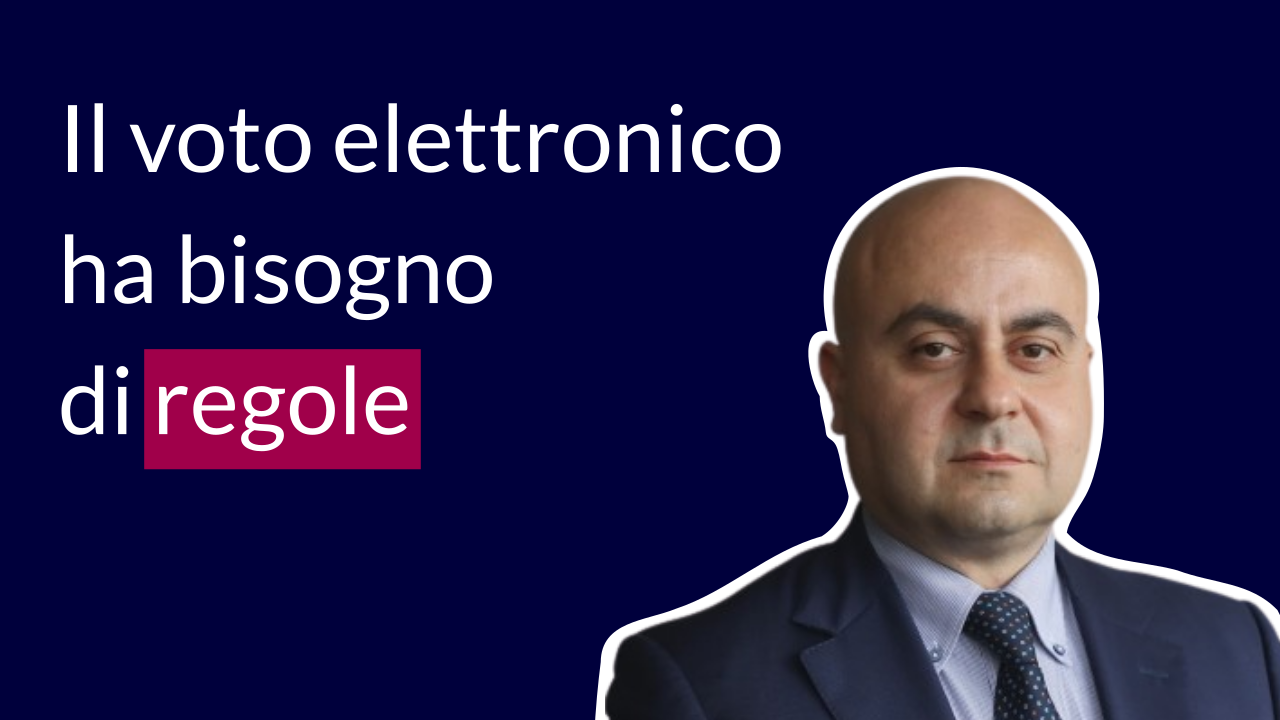
The second is: start thinking seriously about regulation. When we say a vote is certified, who decides that? To certify something, I need a rule that allows me to verify that certification, and a mechanism to implement it.
Today there is no clear law that fully regulates electronic voting and these processes. We still rely on civil and administrative rules that, in the best case, were written 30 years ago, and sometimes even older ones.
So legislators should intervene with clear rules that regularize the sector and protect clients from improvised actors who produce unreliable systems and undermine trust in the whole field.
For years I have been asking the political class to deal seriously with this area. Maybe we in the sector should also work more together, associate more, and propose legislative solutions.
Today, after seeing so many boards of directors, public agencies, and other bodies move online, it is obvious that having a norm saying under what conditions you can do things online, and how, would be one of the most useful steps possible.
Alessandro Oppo (47:05)
Thank you very much, Giovanni. It was very interesting.
Giovanni Di Sotto (47:07)
Thank you.
Original Italian transcription
Alessandro Oppo (00:06)
Benvenuti al secondo episodio del Democracy Innovators Podcast in italiano. Oggi il nostro ospite e Giovanni Di Sotto, CEO e fondatore di Multicast. Benvenuto.
Giovanni Di Sotto (00:16)
Grazie.
Alessandro Oppo (00:21)
Prima di entrare nel dettaglio, che cos'e Multicast? In quali aree lavorate?
Giovanni Di Sotto (00:28)
Multicast e un'azienda nata nel campo della crittografia e delle telecomunicazioni. Oggi ha quasi 22 anni. Nel tempo si e spostata dall'analogico al digitale, poi al web. Nel 2014, attraverso un partner, e entrata nel mondo della sicurezza elettronica e del voto elettronico.
All'inizio lavoravamo su sistemi cablati, poi su sistemi smart e wireless, e oggi quelli che utilizziamo sono completamente SaaS o telematici. Nel 2014 abbiamo lanciato un prodotto chiamato SkyVote.
Nel corso degli anni milioni di persone hanno utilizzato i nostri sistemi per diversi diritti e diversi tipi di procedure. Non abbiamo una sola piattaforma, ma piuttosto un pacchetto, un po' come Office, con una serie di prodotti e servizi integrati.
Coprono un ciclo democratico molto ampio: dall'elezione dei componenti di un organo alla gestione dell'intera assemblea, dalla convocazione e gestione dei documenti fino al voto, alla contabilita, alla trascrizione, alla verbalizzazione e alla conservazione a norma secondo le regole dell'amministrazione digitale.
Quindi copriamo, con strumenti autonomi ma integrati, l'intero ciclo di un organo decisionale.
Alessandro Oppo (03:39)
Quindi ci sono davvero due aree. Una e la governance, cioe efficienza e trasparenza. L'altra e la parte piu elettorale, legata al voto.
Giovanni Di Sotto (04:19)
Esatto. La governance e quella classica: consigli comunali, consigli di amministrazione, assemblee dei delegati e organi collegiali che si riuniscono attorno a un'assemblea e devono prendere decisioni.
Il nostro sistema copre l'intero processo: dalla segreteria che programma la riunione, all'ordine del giorno, alla preparazione e popolazione dei documenti, ai promemoria, alle delibere e a tutto cio che riguarda l'assemblea in se.
Poi c'e la gestione dell'assemblea: calcolo del quorum, tempi di parola, interventi e tutti gli aspetti procedurali di cio che accade dentro un consiglio o un organo collegiale.
Il sistema consente anche di raccogliere una grande quantita di dati. Per esempio, quante volte un determinato consigliere e intervenuto, per quanto tempo, a quante sedute ha partecipato, quante proposte sono state presentate e cosi via. In questo modo il cittadino puo capire meglio se un rappresentante pubblico ha davvero fatto il proprio lavoro, e non giudicarlo solo in modo demagogico sulla base dello stipendio o della semplice presenza.
Sul lato piu direttamente elettorale, abbiamo gestito eventi di voto molto grandi. Per esempio, abbiamo gestito il referendum sulla lingua di insegnamento nella provincia di Bolzano. Piu di 510.000 persone avevano diritto a partecipare.
E stato un caso molto interessante perche una delle questioni che abbiamo dovuto risolvere era l'identificazione dei minori. In quel momento, nel 2022, non tutti avevano SPID o gli altri strumenti standard. Cosi, insieme alla societa che gestiva l'infrastruttura informatica della provincia, abbiamo costruito un sistema di riconoscimento anche per i ragazzi fino a 16 anni.
Questo ha portato al voto circa il 40 per cento dell'intero pubblico avente diritto, che e una percentuale molto alta per un processo di quel tipo.
Alessandro Oppo (09:29)
E avete gestito molte altre elezioni di questo tipo?
Giovanni Di Sotto (09:31)
Si, molte altre, sia prima sia dopo quella. Gestiamo votazioni soprattutto per enti di diritto pubblico e privato, ordini professionali, consigli, federazioni e grandi assemblee.
Una delle nostre peculiarita e che in molti contesti siamo stati scelti come arbitro neutrale e non come giocatore. Questo e stato il nostro approccio in quel settore.
Quindi non si tratta solo di un cambiamento tecnologico, ma anche di un cambiamento sostanziale nel modo in cui questi processi vengono gestiti.
Alessandro Oppo (11:17)
Mi chiedevo quanto sia cambiata la piattaforma. Hai detto che e una suite di prodotti diversi e immagino che alcuni siano arrivati dopo.
Giovanni Di Sotto (11:28)
La piattaforma e cambiata moltissimo e cambia quasi ogni giorno. Ci sono tre ragioni principali.
La prima e la sicurezza. Tutto il nostro lavoro si basa sul massimo livello di sicurezza possibile. Non si tratta tanto di qualcuno che cambia completamente un risultato elettorale, cosa molto difficile, ma piuttosto di evitare interruzioni, invalidazioni o situazioni che generano sospetto e incertezza attorno a un'elezione.
Per prevenire attacchi di qualsiasi tipo, la piattaforma viene aggiornata continuamente. Un'altra area di grande cambiamento e l'usabilita.
Gli strumenti del 2014 sono nati in un mondo fatto di Internet Explorer e uso desktop. All'epoca si votava magari da PC o al massimo da tablet. Oggi succede il contrario: le persone votano direttamente dal telefono. Questo ha cambiato molti aspetti dell'interfaccia e dell'esperienza complessiva.
Il terzo punto e l'identificazione. Per ragioni nostre abbiamo sempre introdotto almeno un secondo fattore di autenticazione dentro le piattaforme, anche quando non era ancora obbligatorio. Il punto critico nelle piattaforme di voto e l'autenticazione.
Nel 2015 SPID era ancora quasi un esperimento, quindi abbiamo dovuto inventarci soluzioni nostre. Pensa, per esempio, alle elezioni per casse previdenziali o ordini professionali che gestiscono miliardi di patrimonio. In quei casi i temi della sicurezza, dell'identificazione e della certezza sono centrali.
Questa garanzia la puoi dare solo aggiornando costantemente la piattaforma e migliorando l'usabilita lungo tutto il percorso.
Abbiamo introdotto molte cose principalmente per semplificare il processo. La sfida e che il voto e come avere un solo colpo e dover centrare il bersaglio. Non e come altri processi digitali in cui l'utente puo semplicemente riprovare piu tardi. La persona che usa quella piattaforma la vede per la prima volta in quel momento, quindi deve essere estremamente intuitiva e semplice, ma allo stesso tempo estremamente sicura e capace di certificare il voto espresso.
Questo e stato il nostro sforzo piu grande in questi 11 anni: assicurarci che le persone possano accedere facilmente al sistema ed esprimere il proprio voto.
Alessandro Oppo (16:52)
So che ci sono molte persone scettiche rispetto al voto online. Che tipo di risposta daresti loro?
Giovanni Di Sotto (17:09)
Bella domanda.
Alessandro Oppo (17:17)
Esatto.
Giovanni Di Sotto (17:18)
Sono abbastanza grande da non pensare che il voto elettronico sia la cura per tutti i mali. Ogni problema legato al voto elettronico va preso sul serio. Ma allo stesso tempo abbiamo avuto problemi con il voto analogico per molti anni.
Ci sono due punti principali. Il primo e che chi dice che il voto elettronico non e mai sicuro di solito non conosce a fondo il tema. Il secondo e la rappresentanza e la partecipazione.
Ogni anno in Italia circa 21 milioni di persone hanno il diritto di esprimere un voto in qualche contesto: nei condomini, nelle scuole, nei sindacati, negli ordini professionali, nelle cooperative e in molti altri organismi. Se sommi tutto questo, ottieni un numero enorme di eventi di voto.
Il punto interessante e che chi acquista i servizi di voto non e la stessa persona che esprime il voto. Gli elettori sono l'elettorato passivo, mentre il cliente sceglie lo strumento. Quindi c'e un'asimmetria strutturale.
Da qui nasce il tema vero, che e la partecipazione. Tutti dicono di essere favorevoli alla partecipazione, ma spesso solo fino a un certo punto.
Ti racconto una storia che spiega bene il problema. Durante il Covid, tra marzo e aprile 2020, siamo stati travolti perche improvvisamente le nostre piattaforme sono state richieste in massa.
Molte organizzazioni che avevano storicamente una bassa partecipazione nel voto in presenza hanno scoperto che il voto online cambiava tutto. Se hai 500 iscritti e in presenza si presentano solo in 36, basta un gruppo piccolissimo per decidere tutto. Con la partecipazione online, invece, l'affluenza puo crescere enormemente.
Alcuni enti piccoli, con cosi tante persone a casa durante il Covid, hanno eletto organi con partecipazioni oltre il 70 o l'80 per cento, e in alcuni casi perfino oltre il 90 per cento.
A quel punto il tema diventa la rappresentanza. Una persona eletta dal 4 per cento degli aventi diritto rappresenta chiaramente ben poco al di la di se stessa.
Alessandro Oppo (23:48)
Accidenti.
Giovanni Di Sotto (23:50)
Esatto. Il tema del voto elettronico non e davvero la sicurezza in se, perche molto e verificabile e certificabile. Il vero tema e tutto cio che ci sta attorno: la fiducia, la governance e la volonta politica o istituzionale di accettare una partecipazione piu ampia.
Ci sono molti attori coinvolti in questi sistemi e, per manipolarli in modo significativo, servirebbe un'operazione coordinata enorme.
Nella mia esperienza, la resistenza e molto piu spesso legata a interessi nascosti e alla riluttanza verso una maggiore partecipazione che a una reale comprensione di crittografia o certificazione.
Alessandro Oppo (25:11)
Stavo pensando al voto drive-through che hai citato. Mi ha fatto pensare anche a un'altra cosa. Se il voto online aumenta la partecipazione, potrebbe diventare una cura per l'astensionismo? La tecnologia rende possibile a milioni di persone esprimersi su questioni specifiche, cosa che senza tecnologia sarebbe impossibile. Quindi forse puo trasformare il sistema politico in cui viviamo.
Mi chiedevo quale sia il tuo punto di vista, magari tra cinque o dieci anni.
Giovanni Di Sotto (26:54)
Ci sono due temi. Il primo e l'introduzione del voto tecnologico in un processo naturale come il voto. Il secondo e l'alfabetizzazione digitale di un paese che tende a invecchiare e non a ringiovanire.
Se immagino mio padre o mia madre ottantatreenni davanti a uno schermo, e chiaro che il voto elettronico non e ugualmente semplice per tutti. Detto questo, penso che un modello misto sia realistico e auspicabile: una persona dovrebbe poter scegliere se votare in modo tradizionale o da casa.
Questo sarebbe particolarmente utile per chi deve spostarsi per votare, come gli italiani all'estero o le persone che abitano lontano dal luogo di voto.
I tempi sono maturi per introdurre il voto elettronico almeno in modo complementare. Pensa, per esempio, alle persone malate o comunque impossibilitate a recarsi fisicamente a votare.
C'e stata una sperimentazione un paio di anni fa, spinta dal Movimento 5 Stelle durante il governo Conte e poi attuata sotto Draghi, chiamata iVote, se ricordo bene. Era un test quasi non pubblicizzato e in pratica e stato un flop. Sono stati spesi molti soldi pubblici e si sono raccolti pochissimi voti.
Questo e stato poi usato come prova del fatto che il voto elettronico sarebbe inutile, quando in realta, se fosse stato promosso in modo corretto, probabilmente avrebbe prodotto un risultato molto diverso.
Il vero ritardo sta nell'accessibilita. L'articolo 48 della Costituzione dice che tutti dobbiamo poter votare. Questo significa che l'accesso non puo dipendere solo dal fatto che io possa comprare un certo telefono o avere un certo livello di connessione.
Questo problema puo essere superato, perche in molti paesi esistono sistemi elettronici usati comunque in presenza: elettronici, ma all'interno del seggio. Questo comporta scrutini piu rapidi e meno contestazioni.
La tecnologia e fatta di numeri e certezze. La democrazia e, in molti sensi, la gestione dell'incertezza. Le due cose devono trovare un equilibrio.
Alessandro Oppo (32:07)
Si. La politica spesso sembra piu lenta della tecnologia. La tecnologia evolve rapidamente e tutti i settori fanno fatica a restare aggiornati, ma la politica in particolare.
Quello che mi chiedo e se l'attuale classe politica acquisira gradualmente questa conoscenza degli strumenti digitali e dei sistemi di partecipazione, oppure se invece emergera una nuova classe politica per cui tutto questo sara naturale fin dall'inizio, anche per ragioni generazionali.
Giovanni Di Sotto (33:16)
Guarda, Alessandro, ti dico una cosa. L'eta media della popolazione italiana e di 51 anni, e quella del Parlamento e del Senato e ancora piu alta.
Eppure il Senato italiano e stato uno dei primi parlamenti al mondo, nel 1984, a introdurre il voto elettronico in aula, attraverso un sistema sviluppato nell'orbita di Olivetti. Questo dimostra ancora una volta quanto fosse forte una certa tradizione imprenditoriale e tecnologica italiana.
Il punto non e che un sistema sia magicamente piu certo di un altro in ogni contesto. Il punto e che contesti diversi richiedono garanzie diverse. In un caso stai decidendo le tasse, in un altro magari stai decidendo se andare in guerra. Le condizioni contano.
Allo stesso tempo, se l'eta media delle persone che devono prendere queste decisioni e cosi alta, e normale che la sensibilita verso gli strumenti digitali sia limitata.
Io stesso ho 50 anni e, pur guidando una societa tecnologica e introducendo l'intelligenza artificiale in alcuni servizi, resto cauto per la serieta dei temi che trattiamo.
Molti parlamentari non scrivono nemmeno i propri post su LinkedIn o Twitter. C'e tutta una serie di temi digitali che non e ancora pienamente compresa da chi dovrebbe prendere decisioni strategiche.
Pensa a SPID. In Italia ha separato la storia digitale del paese in un prima e un dopo. All'inizio, alcune parti dello Stato non ci credevano. Poi e diventato essenziale, i provider privati ne hanno sostenuto il peso per anni, e solo dopo lo Stato si e reso conto di quanto fosse indispensabile.
Quella storia dice molto sulla capacita di leggere il cambiamento tecnologico solo dopo che e gia diventato inevitabile.
Alessandro Oppo (38:11)
Prima hai citato nuove funzionalita con l'AI. Pensavo anche alle metriche di cui parlavi prima, come quanto parla un politico, ma l'AI puo probabilmente fare anche cose piu qualitative. Quindi mi chiedevo su quali tipi di funzionalita ti piacerebbe lavorare.
Giovanni Di Sotto (38:42)
Stiamo introducendo l'AI soprattutto nella governance. Usiamo la semantica su grandi archivi di verbali, trascrizioni e registrazioni.
Per esempio, in un consiglio comunale con anni di trascrizioni archiviate, potresti voler sapere cosa ha detto una certa persona su un tema specifico, come un ponte o una determinata politica. Il sistema puo fornire una sintesi e una ricerca mirata su una quantita enorme di materiale che altrimenti richiederebbe molto lavoro manuale e molto tempo.
Possiamo anche supportare la redazione dei verbali, creando una prima sintesi strutturata della riunione, dell'assemblea o della seduta di consiglio, che poi puo essere rivista e archiviata.
Possiamo persino aiutare a identificare scadenze, azioni finali ed elementi che devono risultare conformi a indicazioni legali o procedurali. In questo senso, l'AI aiuta a rendere i processi piu rapidi, piu ottimizzati, piu standardizzati e piu conformi alle regole.
Questa e un'applicazione. Un altro punto importante, che ci riporta a Multicast, e la privacy e la protezione.
Non usiamo sistemi condivisi generici di terze parti per i casi piu sensibili. Utilizziamo dispositivi fisici che restano presso il cliente, dove vengono conservati non solo i dati ma anche il modello addestrato. Dopo anni di addestramento, quel modello diventa parte del patrimonio del cliente e non viene condiviso con nessun altro.
Se necessario, il sistema puo anche essere scollegato dalla rete e rimosso fisicamente. Per alcuni tipi di clienti questo e fondamentale.
Alessandro Oppo (42:28)
Certo.
Giovanni Di Sotto (42:37)
Nel mondo enterprise questo garantisce il massimo livello di privacy. I temi discussi in un consiglio di amministrazione possono essere estremamente delicati, quindi devi sapere dove stanno i dati, quale modello li elabora e a quali condizioni.
Alessandro Oppo (42:57)
Certo.
Giovanni Di Sotto (43:03)
Quel modello imparera da cio che gli dai in pasto.
Alessandro Oppo (43:10)
Si, assolutamente. Capisco. Ultima domanda: se dovessi lasciare un messaggio a chi lavora in questo settore, che si occupi di partecipazione o voto elettronico, in Italia o all'estero, quale sarebbe?
Giovanni Di Sotto (43:29)
Lascerei due messaggi.
Il primo e: continuare a spingere sull'innovazione e ad allargare il mercato in modo ambizioso. Il voto elettronico e ancora un settore relativamente giovane. Quindi credo nel portare innovazione, non solo nel fare business. Se il mercato cresce, tutti ne beneficiano, e possono entrare piu qualita e piu professionalita.
Il secondo e: cominciare a pensare seriamente alla regolazione. Quando diciamo che un voto e certificato, chi lo decide? Per certificare qualcosa mi serve una regola che mi permetta di verificare quella certificazione, e un meccanismo per applicarla.
Oggi non esiste una legge chiara che regoli pienamente il voto elettronico e questi processi. Ci basiamo ancora su norme civili e amministrative che, nel migliore dei casi, sono state scritte 30 anni fa, e a volte su norme ancora piu vecchie.
Quindi il legislatore dovrebbe intervenire con regole chiare che regolino il settore e proteggano i clienti da attori improvvisati che producono sistemi poco affidabili e minano la fiducia nell'intero campo.
Da anni chiedo alla classe politica di occuparsi seriamente di quest'area. Forse dovremmo lavorare di piu insieme anche noi operatori del settore, associarci di piu e proporre soluzioni legislative.
Oggi, dopo aver visto cosi tanti consigli di amministrazione, enti pubblici e altri organismi spostarsi online, e evidente che avere una norma che dica in quali condizioni si possono fare le cose online, e in che modo, sarebbe uno dei passi piu utili possibili.
Alessandro Oppo (47:05)
Grazie mille, Giovanni. E stato molto interessante.
Giovanni Di Sotto (47:07)
Grazie.

Member discussion: